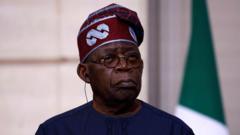
In the complex landscape of Nigerian politics, maintaining an ethnic and religious balance in presidential appointments has been a longstanding tradition. However, recent developments have sparked growing worries that this delicate equilibrium may be under strain. Critics are increasingly vocal about President Bola Tinubu's choices since he took office two years ago, claiming that his appointments disproportionately favor individuals from his own Yoruba ethnic group—a claim that the presidency vehemently denies.
Under Nigeria's constitution, regional representation is mandated for cabinet positions, yet the distribution of other significant roles is typically determined through non-binding conventions aimed at ensuring national unity and harmony among the country's more than 250 ethnic groups. The dominant ethnic groups include the Hausa-Fulanis, Igbo, and Yoruba, each corresponding to different regions of the nation.
The reliance on a historical practice of mixed Muslim-Christian tickets has also been undermined, as Tinubu, a southern Muslim, chose another Muslim as his running mate during the last election. This departure from convention, combined with the mounting criticism regarding his appointments since his ascension to the presidency in May 2023, has raised alarm among various segments of the populace.
Political scholar Lawal Lawal notes that the eight pivotal roles—such as the leadership of the central bank, oil company, police, army, and intelligence agency—are critical to the governance and security of Nigeria. As of now, all these positions have been filled by members of the Yoruba ethnicity, a situation unprecedented in Nigeria's democratic history, according to history professor Tijjani Naniya.
The landscape under previous presidents was more representative. For instance, during Goodluck Jonathan's term (2010-2015), leadership roles were filled by individuals from a variety of ethnic backgrounds, whereas Muhammadu Buhari’s administration had a noticeable but still less glaring dominance of northern ethnic groups.
Concerns over unity and the potential consequences of a single ethnic group's dominance in leadership roles are shared among many Nigerians, particularly those from the north. The recent change in leadership positions—including the controversial removal of Abdulrasheed Bawa, a northern Hausa, from his role as head of the Economic and Financial Crimes Commission (EFCC)—has led to allegations of exclusion and biased political maneuvering.
Tinubu’s administration has defended its approach, claiming an overall balance in appointments across regions, although evidence supporting this assertion remains scant. Some even note that scrutiny and specialization in appointments should transcend ethnic origins.
Amidst these discussions, there is hope for a future where Nigerians no longer prioritize ethnic origins in governance. However, commentators suggest that such a transformation requires consistent leadership that fosters inclusivity over several electoral cycles. As frustrations continue to grow, the question remains: Can Nigeria navigate its traditional complexities to embrace a more united and equitable political framework?
Under Nigeria's constitution, regional representation is mandated for cabinet positions, yet the distribution of other significant roles is typically determined through non-binding conventions aimed at ensuring national unity and harmony among the country's more than 250 ethnic groups. The dominant ethnic groups include the Hausa-Fulanis, Igbo, and Yoruba, each corresponding to different regions of the nation.
The reliance on a historical practice of mixed Muslim-Christian tickets has also been undermined, as Tinubu, a southern Muslim, chose another Muslim as his running mate during the last election. This departure from convention, combined with the mounting criticism regarding his appointments since his ascension to the presidency in May 2023, has raised alarm among various segments of the populace.
Political scholar Lawal Lawal notes that the eight pivotal roles—such as the leadership of the central bank, oil company, police, army, and intelligence agency—are critical to the governance and security of Nigeria. As of now, all these positions have been filled by members of the Yoruba ethnicity, a situation unprecedented in Nigeria's democratic history, according to history professor Tijjani Naniya.
The landscape under previous presidents was more representative. For instance, during Goodluck Jonathan's term (2010-2015), leadership roles were filled by individuals from a variety of ethnic backgrounds, whereas Muhammadu Buhari’s administration had a noticeable but still less glaring dominance of northern ethnic groups.
Concerns over unity and the potential consequences of a single ethnic group's dominance in leadership roles are shared among many Nigerians, particularly those from the north. The recent change in leadership positions—including the controversial removal of Abdulrasheed Bawa, a northern Hausa, from his role as head of the Economic and Financial Crimes Commission (EFCC)—has led to allegations of exclusion and biased political maneuvering.
Tinubu’s administration has defended its approach, claiming an overall balance in appointments across regions, although evidence supporting this assertion remains scant. Some even note that scrutiny and specialization in appointments should transcend ethnic origins.
Amidst these discussions, there is hope for a future where Nigerians no longer prioritize ethnic origins in governance. However, commentators suggest that such a transformation requires consistent leadership that fosters inclusivity over several electoral cycles. As frustrations continue to grow, the question remains: Can Nigeria navigate its traditional complexities to embrace a more united and equitable political framework?