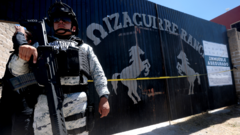
In the shadowy landscape of Jalisco, Mexico, the Izaguirre Ranch has emerged as a site of profound horror following discoveries made by an activist group searching for missing persons. Initially tipped off about potential mass graves, the group unearthed not just communal resting places but rather a horrifying manifestation of drug cartel violence that has plagued the region.
Behind the seemingly innocuous gates of the ranch lie three human crematory ovens, a grim supply of items – 200 pairs of shoes, countless clothing articles, and abandoned suitcases – all presumably belonging to individuals who have vanished due to cartel activity. Luz Toscano, a member of the Buscadores Guerreros de Jalisco Collective that made the discovery, recounted the chilling moments when families began to identify lost loved ones through the abandoned shoes.
The site has been attributed to the New Generation Jalisco Cartel (CJNG), with the belief that it served dual purposes for forced recruitment and horrifying torture, followed by cremation. This gruesome reality has prompted increasing scrutiny, particularly given that local police had conducted prior raids at the ranch without uncovering any evidence of the extensive violence allegedly taking place there.
Critics of local law enforcement and government officials have voiced concerns over possible collusion with cartels, emphasizing a long-standing frustration among victims' families for justice and answers. In a recent video statement, Jalisco's State Governor Pablo Lemus emphasized cooperation with federal authorities, though skepticism remains among the populace regarding police integrity in the matter.
The allegations threaten to overshadow the burgeoning presidency of Claudia Sheinbaum, the Mexican President who has now directed federal investigations into the case. While she has called for patience in the ongoing inquiries, the local media has labeled Izaguirre Ranch as an "extermination" site, raising questions about the efficacy of both municipal and state responses to cartel violence.
As investigations continue amid a flood of pressure from bereaved families seeking closure, the city of Guadalajara prepares to witness a protest march advocating for action surrounding missing persons. Among the marchers is Rosario Magaña, a mother who has not seen her son Carlos since he disappeared in 2017. Her emotional plea underscores the painful realities faced by many families in Mexico, with the slow progress of investigations often leading to a sense of discouragement and a desperate need for accountability from the authorities.
The chilling discoveries at the Izaguirre Ranch serve not only as a stark reminder of cartel brutality but also as a call to action for those fighting for justice in Mexico's ongoing battle against drug-related violence.
Behind the seemingly innocuous gates of the ranch lie three human crematory ovens, a grim supply of items – 200 pairs of shoes, countless clothing articles, and abandoned suitcases – all presumably belonging to individuals who have vanished due to cartel activity. Luz Toscano, a member of the Buscadores Guerreros de Jalisco Collective that made the discovery, recounted the chilling moments when families began to identify lost loved ones through the abandoned shoes.
The site has been attributed to the New Generation Jalisco Cartel (CJNG), with the belief that it served dual purposes for forced recruitment and horrifying torture, followed by cremation. This gruesome reality has prompted increasing scrutiny, particularly given that local police had conducted prior raids at the ranch without uncovering any evidence of the extensive violence allegedly taking place there.
Critics of local law enforcement and government officials have voiced concerns over possible collusion with cartels, emphasizing a long-standing frustration among victims' families for justice and answers. In a recent video statement, Jalisco's State Governor Pablo Lemus emphasized cooperation with federal authorities, though skepticism remains among the populace regarding police integrity in the matter.
The allegations threaten to overshadow the burgeoning presidency of Claudia Sheinbaum, the Mexican President who has now directed federal investigations into the case. While she has called for patience in the ongoing inquiries, the local media has labeled Izaguirre Ranch as an "extermination" site, raising questions about the efficacy of both municipal and state responses to cartel violence.
As investigations continue amid a flood of pressure from bereaved families seeking closure, the city of Guadalajara prepares to witness a protest march advocating for action surrounding missing persons. Among the marchers is Rosario Magaña, a mother who has not seen her son Carlos since he disappeared in 2017. Her emotional plea underscores the painful realities faced by many families in Mexico, with the slow progress of investigations often leading to a sense of discouragement and a desperate need for accountability from the authorities.
The chilling discoveries at the Izaguirre Ranch serve not only as a stark reminder of cartel brutality but also as a call to action for those fighting for justice in Mexico's ongoing battle against drug-related violence.