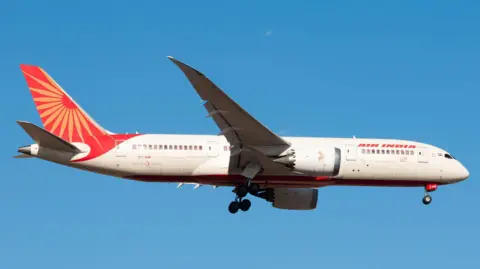
Air India Flight 171: Year‑long Investigation Still Holds Mysteries
On June 12, 2025, the Air India Boeing 787‑8, while taking off from Ahmedabad, lost both engines and crashed into a medical college campus, killing 260 people. A year later, investigators still have no definitive answer to the baffling sequence of events that caused the crash.
The Crash and Preliminary Findings
The first investigation report, released last July, identified that the aircraft’s fuel‑control switches moved to a “cut‑off” position seconds after take‑off, starving both engines of fuel and leading to complete loss of power. This finding raised a flood of speculation about whether the pilot’s action caused the failure or whether an unseen mechanical or electrical fault set the switches in motion.
The Fuel‑Control Switch Conundrum
These switches are normally used only before take‑off, during emergencies, or after landing. Two competing interpretations exist: one says the switches were deliberately moved by a pilot to initiate a shutdown; another proposes the switches reflected a pre‑existing engine failure and were moved as part of Boeing’s dual‑engine failure recovery procedure. Each scenario requires different continuities of data from flight recorders and engine telemetry, which remain unresolved.
What the Cockpit Voice Recorder Can Reveal
The pilot’s brief line, “Why did you cut the switches?” followed by “I did not,” has spawned debate. The lack of context—such as the timing of the comment relative to engine loss—means the full transcript could either confirm an intentional action or merely support an accidental sequence. Investigators say the complete voice recorder will likely be decisive once matched to the final seconds of flight data.
The Ram Air Turbine Puzzle
Investigators report that the Ram Air Turbine (RAT) was delivering hydraulic power within five seconds after the switches moved. However, simulator tests suggest a delivery time of 14–18 seconds, implying the RAT may have activated after the engines had already lost thrust. The discrepancy fuels doubt about whether the RAT deployment was a procedural response or a symptom of an earlier failure.
Engine Analysis and Report Delays
Reports from Reuters and Bloomberg mention that the final AAIB report is stalled by ongoing engine examinations. Both General Electric GEnx engines were aged, but still within their expected service life. Dual engine failures on modern airliners are rare, and the absence of a clear mechanical cause is driving the delayed review.
Political and Institutional Controversy
A careful pan‑international review has uncovered that stakeholders—from veteran airline unions, safety campaigners, and airline executives, to government officials—have vested interests in the outcome. A pilot union claims the focus on cockpit actions prematurely implicates crew, while investigative experts warn that politicised delays “muddy the waters” and erode public trust in any eventual final report.
What Remains Unknown?
Key questions still linger: did the engines lose thrust during the take‑off roll or after becoming airborne? Did an electrical or hydraulic fault trigger a reboot of flight computers as suspected by some researchers? What did the full cockpit transcript reveal? Until these questions are answered in the final report, the accident’s root cause remains shrouded.
Looking Forward
As the investigation continues, the aviation community watches closely. The eventual final report will be critical not only to the families affected, but to global aviation safety protocols and public confidence in aircraft design and regulatory oversight.