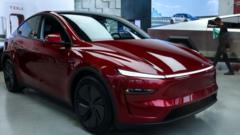
As Tesla intensifies its efforts to enter the Indian market, recent announcements of job openings in Delhi and Mumbai reflect a decisive step towards establishing a presence in Asia's third-largest economy. However, the road to winning over India's price-conscious consumers remains fraught with challenges, particularly given that local manufacturers dominate the electric vehicle (EV) landscape.
Currently, Tata Motors leads the Indian EV market with over 60% market share, followed by MG Motors with 22%. The price point for Tesla’s base model hovers around $40,000 (£31,637), making it a luxury vehicle in contrast to the significantly lower-priced offerings from local manufacturers. Consequently, without a cost-effective model tailored for this market, Tesla may struggle to gain traction.
In addition to competitive pricing, Tesla must contend with India's diverse and challenging road conditions. The company's vehicles, particularly ones with low ground clearance, might require extensive modification for local adaptability—a costly endeavor that raises questions about the feasibility of significant engineering changes for a limited market presence.
Despite this, the Indian government is actively courting Tesla, with ambitious plans to increase EV adoption significantly by 2030. The government has also instituted subsidies for electric cars, reportedly as high as 46% for the best-selling models, which has seen the annual number of passenger EV sales leap from 4,700 to 100,000 over the past five years.
This favorable environment has been complemented by recent tax reductions on imported EVs for global manufacturers willing to invest locally. This policy shift, motivated by global players' complaints about high tariffs, aims to promote local production, but it could inadvertently disadvantage domestic manufacturers.
While established Indian companies like Mahindra and Mahindra are welcoming the competition, they are also cautious about ensuring a level playing field in maintaining market dynamics. Enhanced technology and robust battery solutions are vital areas where local players plan to compete with Tesla’s advanced offerings.
Additionally, Tesla's international brand image and status appeal to India’s aspiring populations might create a segment of consumers willing to pay a premium for the American brand. However, Tesla has yet to confirm any plans for manufacturing within India, suggesting that initial sales may remain reliant on imported units.
Ultimately, as conversations around tariff structures and trade relations develop, the timing of Tesla's factory establishment in India—and its long-term competitive strategy—will hinge on a balance of market demand, infrastructure development, and international trade policies.
Currently, Tata Motors leads the Indian EV market with over 60% market share, followed by MG Motors with 22%. The price point for Tesla’s base model hovers around $40,000 (£31,637), making it a luxury vehicle in contrast to the significantly lower-priced offerings from local manufacturers. Consequently, without a cost-effective model tailored for this market, Tesla may struggle to gain traction.
In addition to competitive pricing, Tesla must contend with India's diverse and challenging road conditions. The company's vehicles, particularly ones with low ground clearance, might require extensive modification for local adaptability—a costly endeavor that raises questions about the feasibility of significant engineering changes for a limited market presence.
Despite this, the Indian government is actively courting Tesla, with ambitious plans to increase EV adoption significantly by 2030. The government has also instituted subsidies for electric cars, reportedly as high as 46% for the best-selling models, which has seen the annual number of passenger EV sales leap from 4,700 to 100,000 over the past five years.
This favorable environment has been complemented by recent tax reductions on imported EVs for global manufacturers willing to invest locally. This policy shift, motivated by global players' complaints about high tariffs, aims to promote local production, but it could inadvertently disadvantage domestic manufacturers.
While established Indian companies like Mahindra and Mahindra are welcoming the competition, they are also cautious about ensuring a level playing field in maintaining market dynamics. Enhanced technology and robust battery solutions are vital areas where local players plan to compete with Tesla’s advanced offerings.
Additionally, Tesla's international brand image and status appeal to India’s aspiring populations might create a segment of consumers willing to pay a premium for the American brand. However, Tesla has yet to confirm any plans for manufacturing within India, suggesting that initial sales may remain reliant on imported units.
Ultimately, as conversations around tariff structures and trade relations develop, the timing of Tesla's factory establishment in India—and its long-term competitive strategy—will hinge on a balance of market demand, infrastructure development, and international trade policies.