In brief
A brutal gang rape, allegedly happening in the home of a 28‑year‑old Bihar woman on 11 June, has reignited memories of Delhi’s horrific 2012 assault. The survivor, referred to as Soma, was attacked in the village’s outdoor toilet, stripped, gagged, and subjected to gruesome violence, including insertion of objects and a bullet casing. Police apathy and delayed medical care drew public outrage. Police have arrested two of the five accused; the case is under a Special Investigation Team. The incident highlights the persistent failure to protect women in rural India, despite heightened scrutiny after Delhi’s assault.
On the night of 11 June, 28‑year‑old Soma, a mother of four, was brutally gang‑raped in her own home in a village of Begusarai district, one of India’s most backward regions. The crime, described by survivors and activists as a stark echo of the 2012 Delhi assault, involved the insertion of objects—including a bullet casing—into her vagina, in a violent attack that left her in severe pain and shocked.
WARNING: Some of the details the woman has shared with the BBC are grim and make for difficult reading.
She was in the outdoor toilet—there is no door, only a cloth curtain—when five men entered, stripped her, gagged and tied her hands, and used a blade to slashes her chest. When she struggled, the men fled but not before leaving her severely battered. By morning, a neighbour had unlocked the door to help her reach the nearest police station a few kilometres away.
Despite the gravity of the assault, the police station's head was reported to have dismissed her report, refusing to file a complaint and asking her to seek medical care instead. The police later surrendered the case to a Special Investigation Team that has arrested two of the accused; the remaining three are still at large. Begusarai Superintendent of Police Maneesh confirms that “medical report has confirmed sexual assault” and that the accused are being investigated under sections dealing with gang rape.
Initial medical care was inadequate: a private clinic turned her away, stating it had no doctor on duty. She next went to a government community health centre and then to a district hospital, where an examination was delayed until 13 June, after she revealed the gang‑rape. The doctor was reportedly only offered the question, "Were you raped as well?", to which Soma responded simply, "Yes, Madam, I was." She was discharged after a day, re‑admitted after a loss of consciousness, and then discharged again a day later.
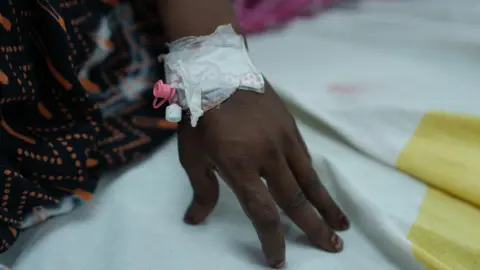
A village midwife later examined her further: on 18 June she presented a bullet casing that had been inserted into her vagina. The civil surgeon confirmed the presence of other objects, removed them, and declared her stable. Although Soma is currently recovering, she remains in pain and is still in a hospital bed, regarded by journalists, politicians and activists as a symbol of the ongoing crisis of sexual violence across India's backward regions.
Her case has triggered public outrage and comparisons with Delhi’s 2012 assault, raising questions about why heightened scrutiny following the tragedy has not curtailed similar crimes. Incidents of rape remain each year among more than 30,000 recorded in India, with many cases still unreported due to societal desensitisation and institutional apathy.
In Begusarai, while doctors say the survivor is stable, she remains concerned for her young children, who live with relatives 35 km away. Her hope for a speedy recovery and return home to her children underscores the personal toll such violence takes beyond headlines.
Photos show the house with an outdoor bathroom, covered only by a cloth curtain, and the hospital surroundings where Soma is treated. The images remind viewers that such atrocities can happen beyond the urban spotlight, in the remote corners of India where the state’s protective mechanisms often fail.