In brief
Recent satellite imagery and verified reports reveal over 1,400 buildings have been demolished in southern Lebanon amid escalating conflict between Israel and Hezbollah. The scale of destruction raises significant legal and humanitarian concerns, as experts warn that these actions could constitute war crimes.
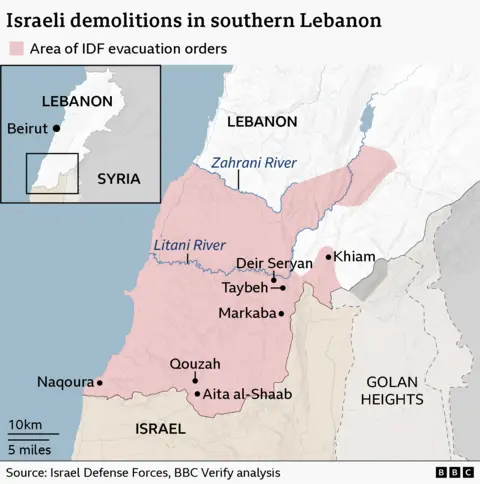
Towns and villages in southern Lebanon are being levelled by Israeli demolitions, satellite images and videos obtained by BBC Verify reveal. BBC Verify analysis found more than 1,400 buildings had been destroyed since March 2 based on verified visual evidence. This is just a snapshot of the overall destruction, as limited access on the ground and available imagery suggest the real number is likely much higher.Israel's demolition campaign follows Defence Minister Israel Katz's directive on March 22 to escalate the destruction of Lebanese homes near the border in a bid to counter Hezbollah, referencing tactics used in Gaza. Legal experts have described these systematic demolitions as potentially constituting war crimes, emphasizing that international humanitarian law prohibits the destruction of property unless it is imperative for military necessity.The demolitions intensified after a series of Hezbollah rocket and drone attacks launched on March 2 in retaliation for the killing of Iran's supreme leader. The Israeli Defense Forces (IDF) maintain that they operate in line with the Law of Armed Conflict, asserting they only destroy property deemed necessary for military objectives, without providing specified evidence regarding embedded Hezbollah infrastructure within civilian areas.As the conflict continues to escalate, the humanitarian implications are severe, with more than 1.2 million people estimated to have been displaced across Lebanon. The Lebanese health ministry has reported over 2,000 fatalities since the onset of the current war, with communities now unrecognizable amidst the chaos and devastation.A comparison of satellite images from February to April highlights the extensive destruction in places like the town of Taybeh where over 400 buildings were levelled. The international community continues to scrutinize these actions, emphasizing the need for urgent humanitarian intervention and protection of civilians amidst growing concerns of ethnic cleansing and collective punishment within Shia communities amid the ongoing conflict.