In brief
The US is weighing military options to capture Kharg Island, which is critical for Iran's oil exports. With rhetoric escalating, experts examine the feasibility and potential consequences of this aggressive stance, including Iranian defense capabilities and the risk of heightened conflict in the region.
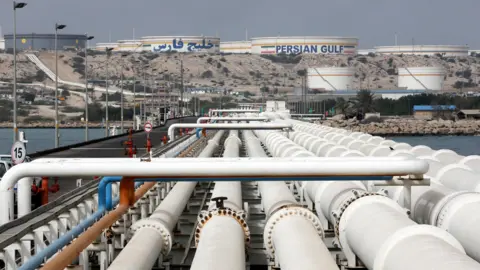
The United States may be considering a bold military move to seize Iran's Kharg Island, an essential oil export terminal, amid escalating tensions with Iran. This operation, hinted by President Donald Trump, could aim to exert pressure on Iran by choking off its oil exports, which comprise about 90% of its total exports passing through Kharg.
Historically, Kharg Island has been a focal point for oil logistics given its waters, which allow for loading large Very Large Crude Carriers (VLCCs). The potential military operation to capture the island raises numerous questions about strategy, motivations, and risks.
During the Iran-Iraq war in the 1980s, Kharg was a target for air strikes, including a recent US strike against military targets on the island while sparing its oil infrastructure. A potential invasion is speculated to be a short-term tactic, squeezing Tehran's oil abilities until it yields on other geopolitical fronts.
Iran's defensive posture is likely bolstered by the recent threats from government officials, warning of fierce retaliation against any invading forces. Enhanced defenses, including surface-to-air missile systems, suggest that Iranian military readiness is high.
If executed, US forces would potentially deploy troops via airborne assaults and amphibious landings using Osprey tilt-rotor aircraft and landing crafts. However, any such actions would likely encounter significant resistance, including hidden mines and swarms of drones. The resulting combat may lead to considerable casualties, compounding the stakes for US intervention.
Questions remain regarding the US’s capability to hold Kharg Island post-capture, especially with Iranian bombardments expected from the mainland. Observers parallel the scenario with Ukraine's Snake Island, where initial capture led to continuous assaults.
Additionally, the US finds itself balancing military options with diplomatic channels to derive an agreement with Iran, complicating its strategy further. As the situation evolves, the global community watches closely, awaiting a potential pivot that could redefine military and geopolitical landscapes in the region.