In brief
Indiana recently faced intense debates over new congressional district maps, highlighting the evolving definitions of fairness in politics. As the state aims for mid-decade redistricting amidst partisan pressures, concerns about minority representation and community voices are emerging. Despite a rejection of a Trump-supported redistricting plan, other states proceed with similar plans affecting upcoming elections.
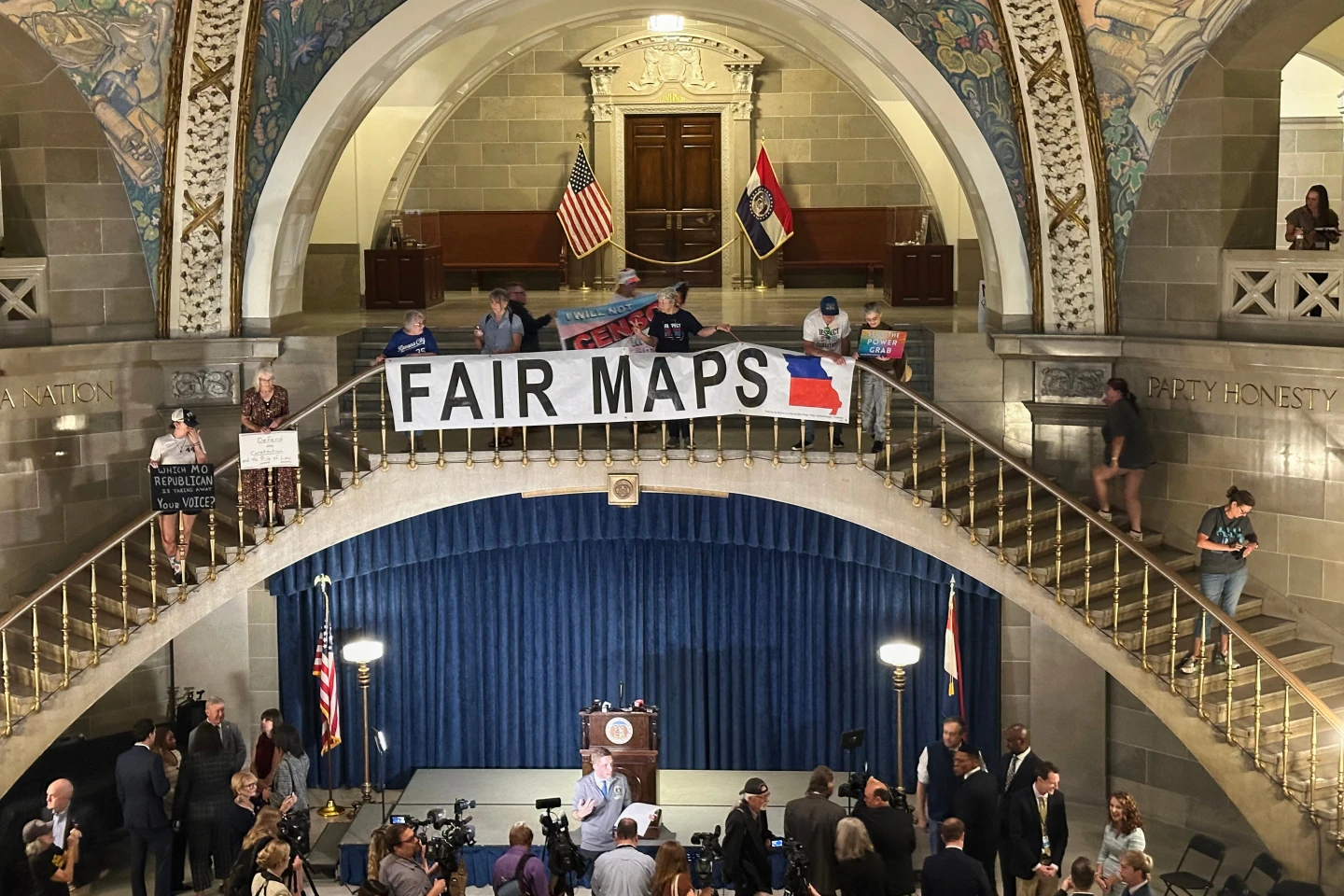
When Indiana adopted new U.S. House districts four years ago, Republican legislative leaders lauded them as “fair maps” that reflected the state’s communities. But when Governor Mike Braun recently attempted to redraw the lines to enhance Republican gains, he urged lawmakers to “vote for fair maps.”
What changed? The definition of 'fair.' As states undertake mid-decade redistricting instigated by political pressures, both Republicans and Democrats are leveraging differing interpretations of fairness to justify the manipulation of districts for partisan advantage. They argue it is fair because other states have done likewise, and necessary to maintain a balance in the House that mirrors the national political divide.
This new redistricting vision leads to a winner-take-all mentality, effectively treating the House, which historically included a diversity of politicians, like the Senate, where representation reflects the majority party. This shift risks minimizing power for minority communities and muffling distinct voices in Washington.
Although Indiana state senators rejected a Trump-backed map intended to secure all nine congressional seats for Republicans, changes have already been made in states like Texas, California, and North Carolina. As more states consider alterations before the 2026 midterms, it raises questions about the fundamental principles of representation.
“It’s a fundamental undermining of a key democratic condition,” stated Wayne Fields, a political rhetoric expert. “The House is supposed to represent the people.”
Redistricting and Community Representation
The House consists of 435 seats allocated among states based on population, guaranteeing each a minimum of one representative. This year's redistricting threatens to dilute local representation with tactics that fracture communities. For example, voters in California’s rural counties backing Trump have been repositioned with liberal coastal areas, altering traditional voter alignment.
In Missouri, Democratic-leaning voters in Kansas City were divided among three districts, stretching out to predominantly Republican areas, leading to concerns about their voices being overshadowed in political discourse.
Despite protests, some governors defend these actions as fair responses to other states' strategies and to amplify their majority voice. Indiana’s current U.S. House delegation reflects these political dynamics, with seven Republicans and two Democrats. Recent proposed maps faced opposition, yet supporters argued that the established representation didn’t accurately reflect the state's voting strength.
Risk of Non-representation
Nationally, the U.S. House is seen as politically balanced with a close Republican majority. However, significant disparities exist in numerous states where congressional districts favor one party, exacerbating a polarizing political climate. Experts warn that failing to ensure fairer redistricting processes risks disenfranchising vast swathes of voters.
Rebekah Caruthers of the Fair Elections Center emphasizes the need for compact districts that enable fair representation of communities of interest, arguing that current gerrymandering tactics create unjust disenfranchisement.
Ultimately, as discussions unfold in Indiana and beyond, the implications of this redistricting dilemma reflect deeper concerns about democracy's health and the representation of diverse American voices.