In brief
As lawmakers prepare to leave Washington for a 10-day recess, a government shutdown for the Department of Homeland Security appears imminent. Negotiations between the White House and Congressional Democrats stalled over demands for stricter immigration enforcement controls. Senate Democratic leader Chuck Schumer emphasized the need for accountability and substantive changes before funding can be secured, while mentioning that past assurances from the administration do not suffice.
WASHINGTON (PulseWire) — A shutdown for the Department of Homeland Security (DHS) appears certain as lawmakers in both the House and Senate are set to leave Washington for a 10-day break, with negotiations concerning Democrats’ demands for new restrictions on immigration enforcement having stalled.
The White House and Democrats have exchanged proposals in recent days, aiming to address the Democrats’ calls for enhanced regulation of immigration enforcement actions. Democrats are pushing for improvements in identification protocols for law enforcement agencies like U.S. Immigration and Customs Enforcement (ICE), new standards of conduct, and a greater reliance on judicial warrants for enforcement actions.
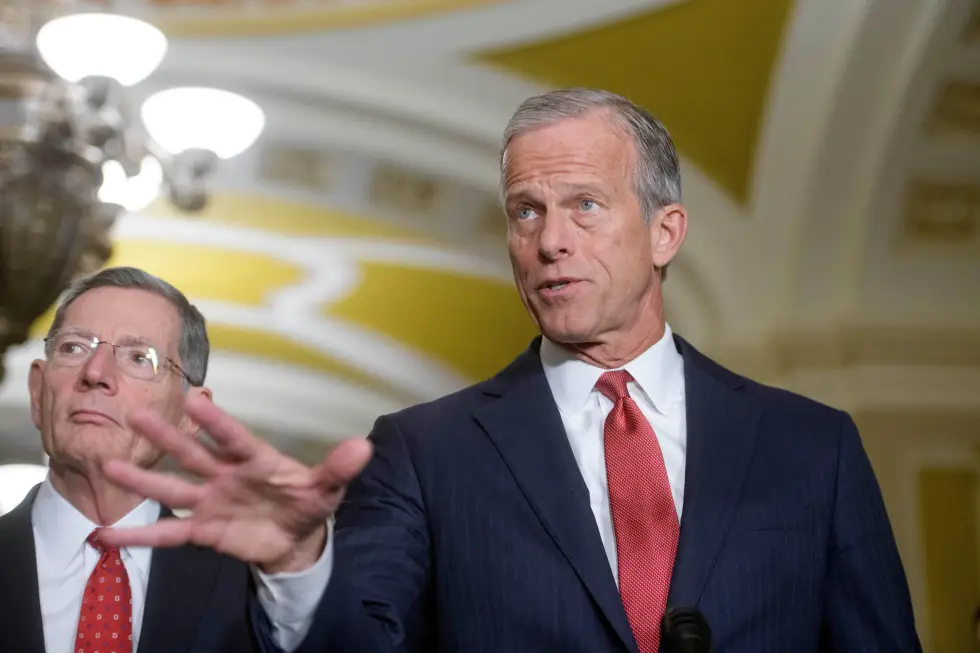
The latest offer from the White House, as indicated by Senate Majority Leader John Thune, included certain concessions from the Republicans. However, Thune withheld specifics on these concessions and admitted that significant distance remains toward an agreeable solution.
Publicly, Democrats did not respond to the White House's offer. Instead, they effectively blocked a funding vote for the DHS before departing, leaving the funding to lapse without further action starting Saturday. The funding bill had failed to secure the necessary votes, being rejected 52-47.
Should a shutdown occur, it would not initially hinder immigration enforcement operations due to existing funding structures allowing for operations. However, other essential agencies within DHS, such as FEMA and the TSA, may experience more severe impacts in the event of prolonged shutdown.
Senate Democratic leader Chuck Schumer asserted that Americans seek accountability and an end to the chaos and called for the White House and Republicans to listen and respond to the issues raised by members of his party.
Democratic leadership indicated that legislation is needed to impose tighter restrictions on ICE51, especially following criminal incidents involving enforcement agents. Schumer claimed the proposed limitations reflect necessary steps to ensure accountability and safeguard citizens' rights.
The key demands posed by Democrats include requiring judicial warrants for entry onto private property by DHS officers, a clampdown on 'roving patrols,' which target individuals in public and private spaces, and clearer use-of-force protocols for federal officers.
As Democrats push for these enhancements, many Republicans have signaled opposition to the majority of demands, displaying a standoff that raises the likelihood of a governmental standstill unless significant concessions can be brokered swiftly.
In the case of a shutdown, agencies like FEMA may find their long-term planning processes compromised, as funding for these agencies may become precarious without a renewed budget, especially in response to emergency management needs. While short-term relief efforts can continue with existing balances, the sustainability of such efforts remains uncertain amid fiscal constraints.