In brief
Imran Khan, the former Prime Minister of Pakistan, remains imprisoned and isolated, with claims from his family that the military is stifling his communications with the outside world. This repression extends beyond Khan, impacting journalists and activists who face increased risks and restrictions on free speech. Recent cases highlight a growing trend of punitive measures against those opposing the military's influence, indicating a shift toward authoritarianism in Pakistan.
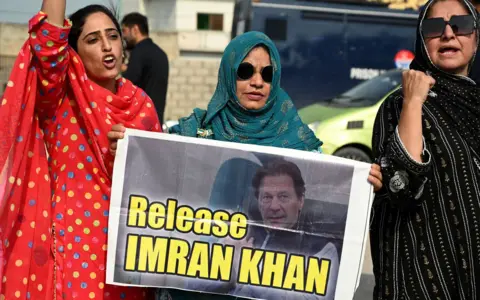
In Pakistan, the military has ramped up its efforts to silence voices of dissent as the former Prime Minister, Imran Khan, languishes in prison without visitor access for over five weeks. Khan's family asserts that his isolation is a tactic employed by the military under Field Marshal Asim Munir to suppress his influence and prevent his criticisms of the government from reaching the public domain.
Reports suggest that Khan is not the only individual under pressure in Pakistan’s increasingly oppressive landscape. Journalists, analysts, and human rights advocates are witnessing a constriction of the freedom to dissent, faced with heightened risks of persecution. High-profile cases like that of human rights lawyer Imaan Mazari and her husband, sentenced to ten years in prison for their anti-state social media posts, exemplify a broader crackdown on opposition voices.
A multitude of activists and analysts highlight that the constraints on free speech and assembly have significantly escalated in recent weeks, with tangible effects on the ability of citizens to express discontent with the ruling powers. The current environment is reminiscent of previous periods under military influence, pushing many commentators to suggest that Pakistan is edging closer to authoritarian rule.
New legal frameworks and amendments have been leveraged to criminalize dissent, leading to tighter control over media narratives and a pervasive culture of self-censorship among journalists. Veteran reporters have reported instances of inappropriate governmental interference and cultivated fear leading to cautious coverage, citing that narratives undesirable to authorities are suppressive to discussion in media outlets.
/As Pakistan navigates these turbulent political waters, the silencing of Imran Khan serves as a stark reminder of the lengths to which the current military and governmental leadership will go to maintain control and silence opposition. Advocates insist that this repression is unsustainable, pointing to the growing desire for authentic voices within the populace, despite attempts to stifle discourse.