In brief
The European Union has officially listed Iran's Revolutionary Guard Corps (IRGC) as a terrorist group in response to brutal crackdowns on demonstrators, marking a change in stance from earlier hesitation among EU members. The decision reflects escalating international condemnation of Iran's repression amid widespread protests, with French and EU diplomats emphasizing the need for accountability. Additional sanctions on Iranian officials were also announced.
The European Union has added Iran's Islamic Revolutionary Guard Corps (IRGC) to its terrorist list in response to Tehran's deadly crackdown on protesters in recent weeks.
The bloc's top diplomat Kaja Kallas stated that EU foreign ministers took the decisive step because repression cannot go unanswered. Kallas noted that the decision positions the IRGC, a major military, economic, and political entity in Iran, alongside jihadist groups such as al-Qaeda and the Islamic State.
Human rights organizations report thousands of protesters were killed by security forces, including the IRGC, during recent uprisings in December and January.
French Foreign Minister Jean-Noel Barrot labelled the crackdown as the most violent repression in Iran's modern history and affirmed there could be no impunity for those responsible for the violence.
Despite previous hesitations concerning diplomatic ties with Iran, France has strongly supported efforts to blacklist the IRGC, responding to a rise in violent repression of peaceful protesters in the country.
Kallas emphasized that any regime which resorts to the killing of its citizens is ultimately working towards its own downfall, while still believing in the importance of diplomatic channels with Iran even after the IRGC's designation as a terrorist group.
The designation places the IRGC under EU sanctions designed to disrupt its support networks, which include travel bans and asset freezes.
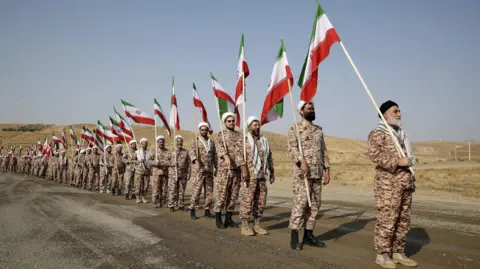
The IRGC, established shortly after the 1979 revolution, boasts about 190,000 active personnel and plays a significant role in both Iran's internal repression as well as its military engagements abroad.
Along with classifying the IRGC, the EU has announced sanctions targeting six entities and 15 individuals involved in repressive actions, which include Iran's Interior Minister and Prosecutor General.
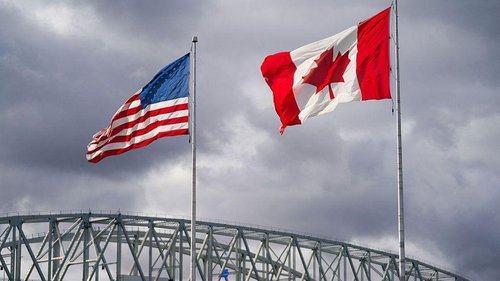
The EU's move follows similar designations from countries like Australia, Canada, and the US, although the UK has not yet classified the IRGC.
The ongoing violence and suppression of protests in Iran have raised concerns globally, with estimates from human rights organizations detailing significant casualties among protesters amidst governmental pushback.