In brief
Melania Trump made headlines with a statement denying any connection to Jeffrey Epstein, calling for public hearings for survivors and bringing attention back to the Epstein crisis. Her remarks sparked swift reactions from survivors and raised questions about the timing and motivations behind her comments. Despite her husband's previous dismissal of the Epstein files, Melania's stance diverges, indicating a break in their approaches. While some view her call for action as commendable, others argue it shifts the burden onto survivors without taking accountability.
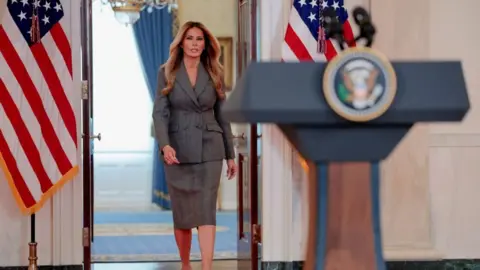
As Melania Trump walked up to the White House podium on Thursday, standing where US President Donald Trump had just over a week ago made his address to the nation on Iran, there was absolutely no indication that this would be a jaw-dropping appearance. There was curiosity, yes, but no one guessed it would be must-see viewing. Not even those most plugged into the administration had any forewarning of the topic, according to officials.Flanked by US flags, her first sentence jolted those listening: The lies linking me with the disgraceful Jeffrey Epstein need to end today. With those words, the Epstein crisis that had plagued the president was once again front and centre thanks to his wife. Immediately, US cable channels broke away from their coverage on Iran, given the gravity of what was unfolding.The first lady has maintained a relatively low profile, strategically selecting her few public events. She hardly shares the same flair for the dramatic as her husband. Reading from a prepared statement, she said she never had a relationship with Epstein or Ghislaine Maxwell, was not introduced to her husband by Epstein, and was unaware of Epstein's crimes. She called for public congressional hearings for Epstein survivors to testify and uncover the truth.Questions arose as to why she felt the need to speak out at this time. Rumors swirled that perhaps she was trying to anticipate new developments in the ongoing saga. Investigative journalist Vicky Ward pointed out that her speech did not make sense within the current context, suggesting that had Melania made this statement earlier, public perception might have been different.Reactions from survivors were immediate, with many coordinating responses. Thirteen survivors, along with Virginia Roberts Giuffre's family, issued a statement suggesting that her call for hearings shifted the burden onto survivors. They accused the Trump administration of deflection without accountability for past failures to adequately respond to Epstein's crimes. Democratic leaders interpreted Melania's statements as a significant political opportunity, highlighting potential rifts within the Trump administration regarding its response to the Epstein case.While some survivors commend Melania for her stance, others challenge her to follow her words with actionable support for victims. The call for congressional hearings aligns with ongoing inquiries into Epstein's files, where many documents remain undisclosed despite public demands for transparency. Amidst all, Melania's announcement has reignited attention toward an enduring crisis that seemed stagnant, complicating the Trump administration’s narrative about Epstein and his associates.