In brief
A federal court ruled that the Kennedy Center, officially a memorial to President John F. Kennedy, cannot be renamed without congressional approval. The Trump Center's name was taken down after scaffolding crews replaced the signage, a move that drew cheers from protestors. The decision follows a broader legal battle over the institution’s branding. Trump’s attempts to delay the removal were denied. The case highlights tensions over executive influence on cultural venues.
Trump’s name removed from Kennedy Center after court order
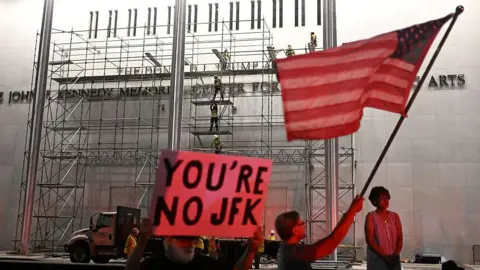
In a swift move following Judge Christopher Cooper’s ruling, the Kennedy Center in Washington, D.C., has taken down the prominent “Donald J. Trump” signage that had appeared on its façade. The change was completed after teams erected scaffolding on Friday evening and replaced the lettering with plain sheeting, amid a gathering of protesters and supporters.
The removal came after the U.S. District Court found that the center, officially a memorial to President John F. Kennedy, cannot be renamed or rebranded without congressional approval. Trump had added his name to the institution last year, leading to legal battles and efforts by groups such as Hands Off the Arts.
Witnesses noted that the work was delayed by a storm, but the removal was completed early Saturday morning. A brief attempt by the Trump administration to pause the order was rejected by the court.
The ruling also blocks the center’s planned two‑year closure for renovations until further arguments. The case underscores the broader tension over the venue’s role as a public memorial and the limits of executive influence over cultural institutions.