In brief
Recent reports indicate that a US F-15 fighter pilot was rescued after being downed in Iran, highlighting the advanced capabilities of the US Air Force's Pararescue units. These elite teams are trained for high-pressure, time-sensitive missions in contested environments, ensuring no one is left behind.
Early reports indicate that the pilot of a US F-15 fighter aircraft downed over Iran was rescued - which, if confirmed, would be the latest in the long history of US combat search-and-rescue missions over decades.
According to CBS, the BBC's US partner, the search operation is ongoing deep inside Iran for a second crew member.
Combat search and rescue, or CSAR, missions are considered among the most complex, time-sensitive operations that US and allied militaries prepare for.
In the US, elite units of the Air Force are specially trained for CSAR missions and are often pre-emptively deployed near conflict areas where aircraft could be lost.
What is Combat Search and Rescue?
Put simply, CSAR missions are military operations aimed at finding, aiding and potentially rescuing personnel in need, including downed pilots and isolated troops.
In contrast to conventional search-and-rescue efforts - which could take place during humanitarian operations or after disasters - CSAR missions occur in hostile or contested environments.
In some cases - as in Friday's reported recovery effort in Iran - the operations may happen deep in enemy territory.
The missions are extremely time-sensitive, as enemy forces would likely be deployed in the same area to try and locate the same US personnel the CSAR teams are trying to rescue.
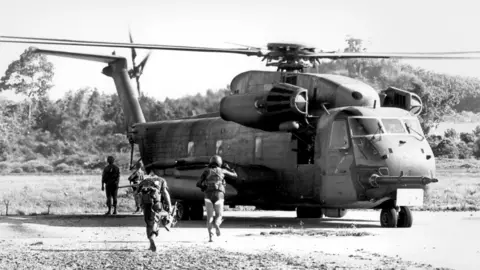
In modern times, CSAR missions are often conducted by helicopters, with refueling aircraft in support and other military aircraft on hand to conduct strikes and patrol the area.
Notably, verified video that emerged from Iran on Friday appeared to show US military helicopters and at least one refueling aircraft operating over Iran's Khuzestan province.
The History of CSAR Missions
Airborne, wartime rescue missions have a long history, dating back to First World War pilots conducting impromptu landings in France to rescue downed colleagues.
The US military's Pararescue units trace their lineage back to a 1943 mission in which two combat surgeons parachuted into then-Burma - now officially Myanmar - to help wounded soldiers.
The world's first helicopter rescue took place a year later, marking the first operational use of a helicopter in combat.
Formal search-and-rescue units in the US were established in the immediate aftermath of World War II, leading to the modern CSAR expansions during the Vietnam War.
One such mission, known as Bat 21, showcased the dangers and complexities of CSAR as several aircraft and man-hours were lost trying to recover the downed pilot.
The US Air Force's Pararescue Teams
While each branch of the US military has limited capabilities for search-and-rescue, it is the Air Force that shoulders primary responsibilities through Pararescue personnel, part of a specialized special-operations force.
The teamwork skills led by Combat Rescue Officers, highly trained like the Pararescuemen, are essential for planning and executing effective rescue missions.
Their motto, These Things We Do, That Others May Live, encapsulates their mission to ensure no one is left behind.
Pararescue teams actively participated in combat missions in Iraq and Afghanistan, with each experience sharpening their effective strategies for high-stakes rescues.
Recent missions have showcased their dedication, especially when confronted critically like the downed pilots in scenarios like Iran.
The future remains unpredictable for CSAR operations, but with ongoing global tensions, their importance and complexity are destined to grow.