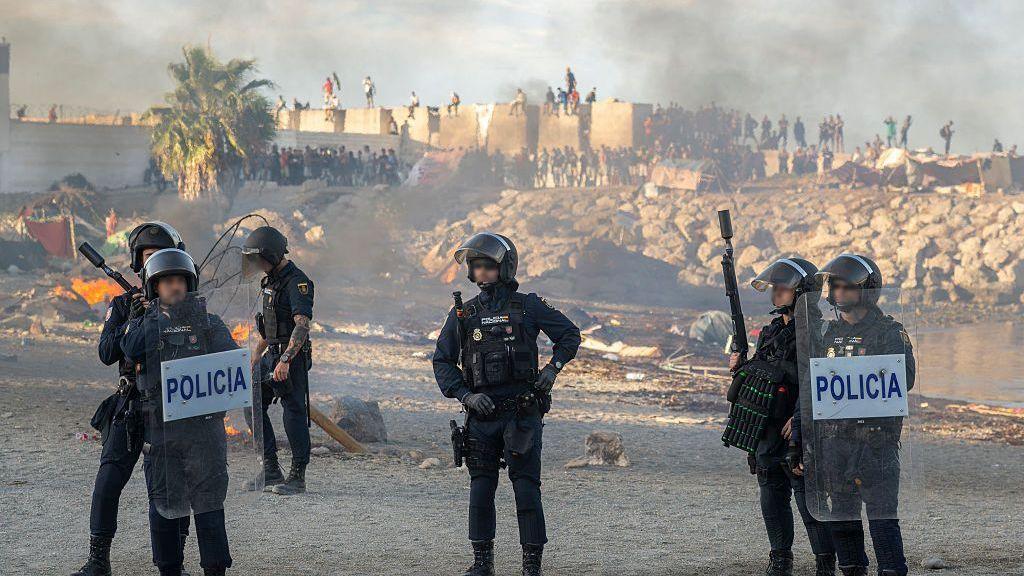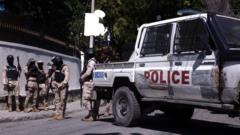
In a shocking breach of security, armed gang members invaded the town of Mirebalais, located northeast of Port-au-Prince, releasing approximately 500 inmates from the local jail on Monday. The attack has drawn serious concern from both local authorities and the wider community as Haiti's National Police responded urgently by sending additional forces to the area. Despite the police regaining some semblance of control, reports indicate many of the escaped prisoners remain unaccounted for and are wandering the streets.
The assailants are believed to belong to two gangs, the notorious 400 Mawozo and a faction called "Taliban," both of which are part of the Viv Ansam coalition responsible for controlling northern Port-au-Prince. This latest incident appears to signify a troubling strategy shift from gangs, indicating an escalation in their reach beyond the capital into more remote regions. Mirebalais serves a strategic purpose as it is situated at junctions of major thoroughfares leading out of Port-au-Prince—one to the coast and another towards the Dominican Republic.
Witnesses described the pandemonium as heavily armed gang members fired indiscriminately at buildings and residents while setting various structures and vehicles ablaze, inducing widespread panic. The gangs targeted the local police station, culminating in the jail breach where they freed nearly 500 inmates, including criminal elements that could further destabilize the area.
This audacious attack comes in the wake of increased violence against law enforcement, highlighted by the recent death of Kenyan police officer Benedict Kabiru, who was killed during a gang confrontation. His murder marked the second fatality among Kenyan peacekeepers deployed to Haiti, as part of a global effort to restore order.
Haitian gang violence reached alarming levels in the past year, with UN reports indicating over 5,600 fatalities attributed to such activity. The situation remains dire, as kidnappings and injuries continue to plague the nation—an urgent call for effective intervention and support for Haiti's steadfast but overwhelmed national police forces as they tackle gang dominance.
The assailants are believed to belong to two gangs, the notorious 400 Mawozo and a faction called "Taliban," both of which are part of the Viv Ansam coalition responsible for controlling northern Port-au-Prince. This latest incident appears to signify a troubling strategy shift from gangs, indicating an escalation in their reach beyond the capital into more remote regions. Mirebalais serves a strategic purpose as it is situated at junctions of major thoroughfares leading out of Port-au-Prince—one to the coast and another towards the Dominican Republic.
Witnesses described the pandemonium as heavily armed gang members fired indiscriminately at buildings and residents while setting various structures and vehicles ablaze, inducing widespread panic. The gangs targeted the local police station, culminating in the jail breach where they freed nearly 500 inmates, including criminal elements that could further destabilize the area.
This audacious attack comes in the wake of increased violence against law enforcement, highlighted by the recent death of Kenyan police officer Benedict Kabiru, who was killed during a gang confrontation. His murder marked the second fatality among Kenyan peacekeepers deployed to Haiti, as part of a global effort to restore order.
Haitian gang violence reached alarming levels in the past year, with UN reports indicating over 5,600 fatalities attributed to such activity. The situation remains dire, as kidnappings and injuries continue to plague the nation—an urgent call for effective intervention and support for Haiti's steadfast but overwhelmed national police forces as they tackle gang dominance.