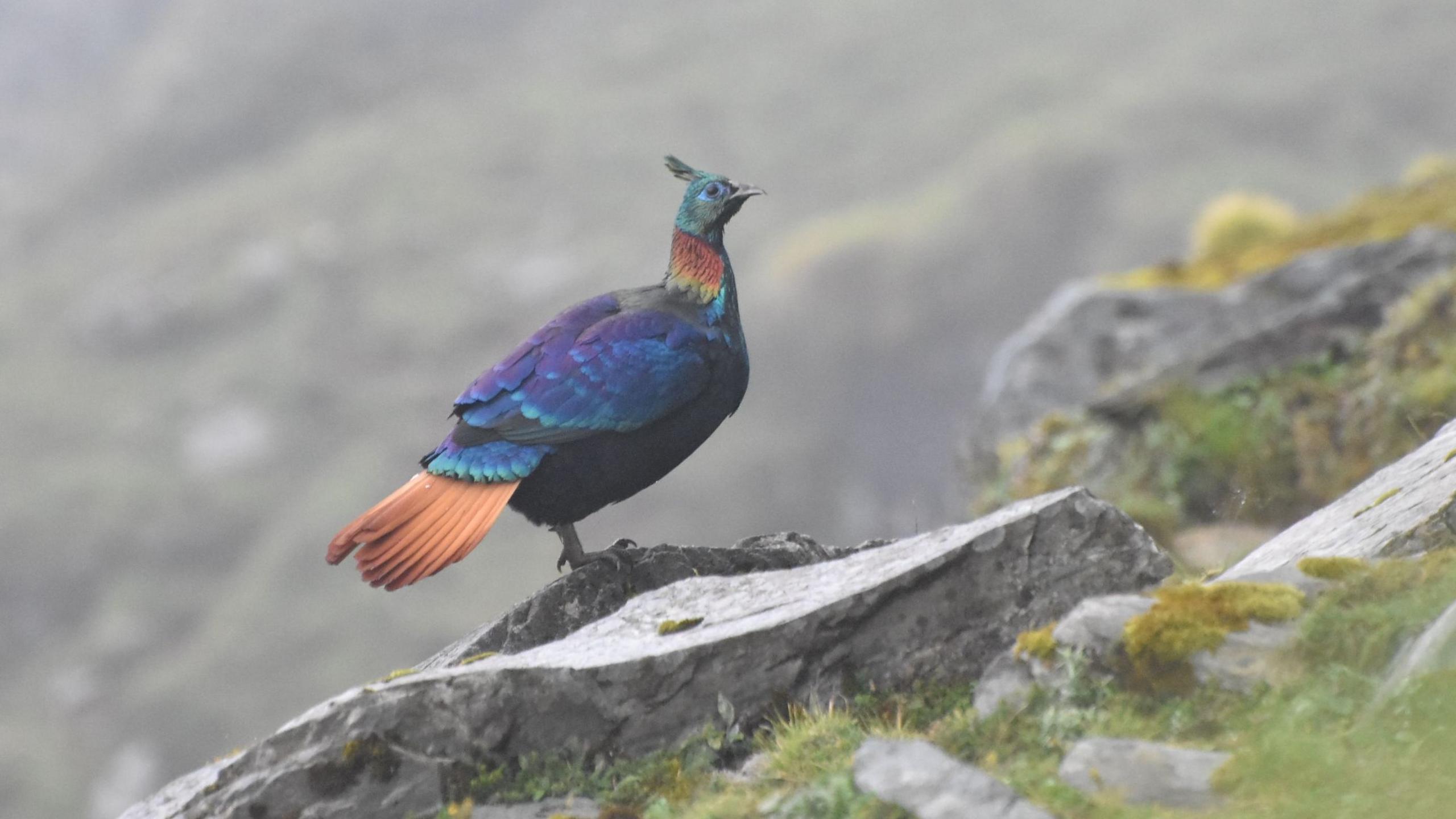
Scientists in Uttarakhand have revealed that the Himalayan monal, the region’s iconic pheasant, is both moving higher and changing its song in response to human activity.
Over five years, Dr. Rajeev Lochan and his team recorded more than 700 monal calls across two valleys—the bustling Chopta and the quiet Madmaheshwar in Kedarnath. They found that birds in noisy settings produced calls with higher peak frequencies and shorter durations, a tweak that cuts through traffic and tourist chatter.
Simultaneously, another study showed the monal is forced to climb up the mountains as alpine meadows become overcrowded by hikers and new roads. Climate models suggest that by 2100, suitable habitat will continue to shrink, isolating populations and threatening long‑term survival.
“This isn’t a permanent evolutionary change; it’s behavioural flexibility,” Lochan explained. “But it provides a warning that other, less adaptable species may follow suit.”
Environmental expert Vishal Singh added that economic growth in the Himalayas is outpacing ecological integrity, and that the monal’s plight highlights a larger crisis where tourism, development and climate change collide.
The research underscores that the Himalayas are at a tipping point. “Listening to the monal is like hearing the mountain ask for space, silence and care,” concluded Professor Anjal Prakash of FLAME University.
Related article: The Himalayas are melting faster – and India’s economy is at risk