Hezbollah has increased its use of small first-person view (FPV) drones to attack Israel, including systems controlled by fibre-optic cables to evade sophisticated defences.
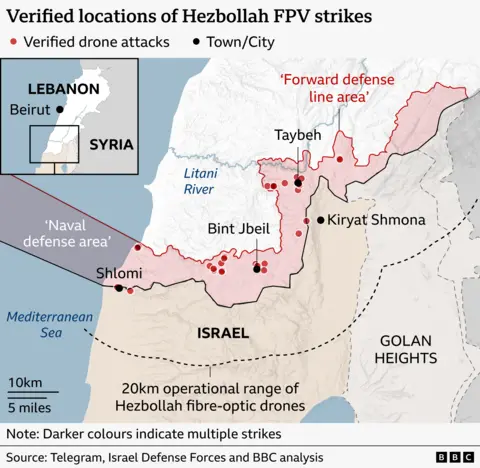
BBC Verify has geolocated 35 videos shared by the Lebanese armed group since March 26, demonstrating strikes on Israeli soldiers, armoured vehicles, and air defence systems in southern Lebanon and northern Israel.
Experts indicate that the Israel Defense Forces (IDF) have yet to develop effective countermeasures against these drones, which can bypass detection systems.
The low cost of these drones, made from commercially available and 3D-printed components, raises concerns due to their capacity to inflict damage on high-value targets.
The widespread use of FPV drones during the Russia-Ukraine war has altered modern warfare capabilities.
Despite incomplete casualty reports, Israeli media reported that four IDF soldiers and one civilian have been killed in FPV strikes, with many others injured.
The IDF has acknowledged the threat posed by drones and is reportedly investing significant resources into improving defences and models for alerting troops.
According to the Institute for National Security Studies, the IDF has been using FPV drones for years, currently deploying them in southern Lebanon and Gaza.
Experts claim that Hezbollah's current drone strategy includes systems that are 'undetectable by radar,' making them a serious threat to Israeli assets.
Hezbollah has shared nearly 100 apparent FPV attacks since March 26, with 35 verified instances.
Verified video evidence shows multiple FPV drones targeting an Israeli border outpost, leading to significant damage to military vehicles.
Many of these drones operate using fibre optic connections, complicating interception efforts by Israeli electronic warfare units.
Military analysts suggest that the psychological impact of these drone strikes on Israeli forces is considerable, given their propensity to threaten even heavily protected vehicles.
The conflict between Israel and Hezbollah escalated significantly following the recent death of Iranian Supreme Leader Ayatollah Ali Khamenei, prompting retaliatory actions from both sides.