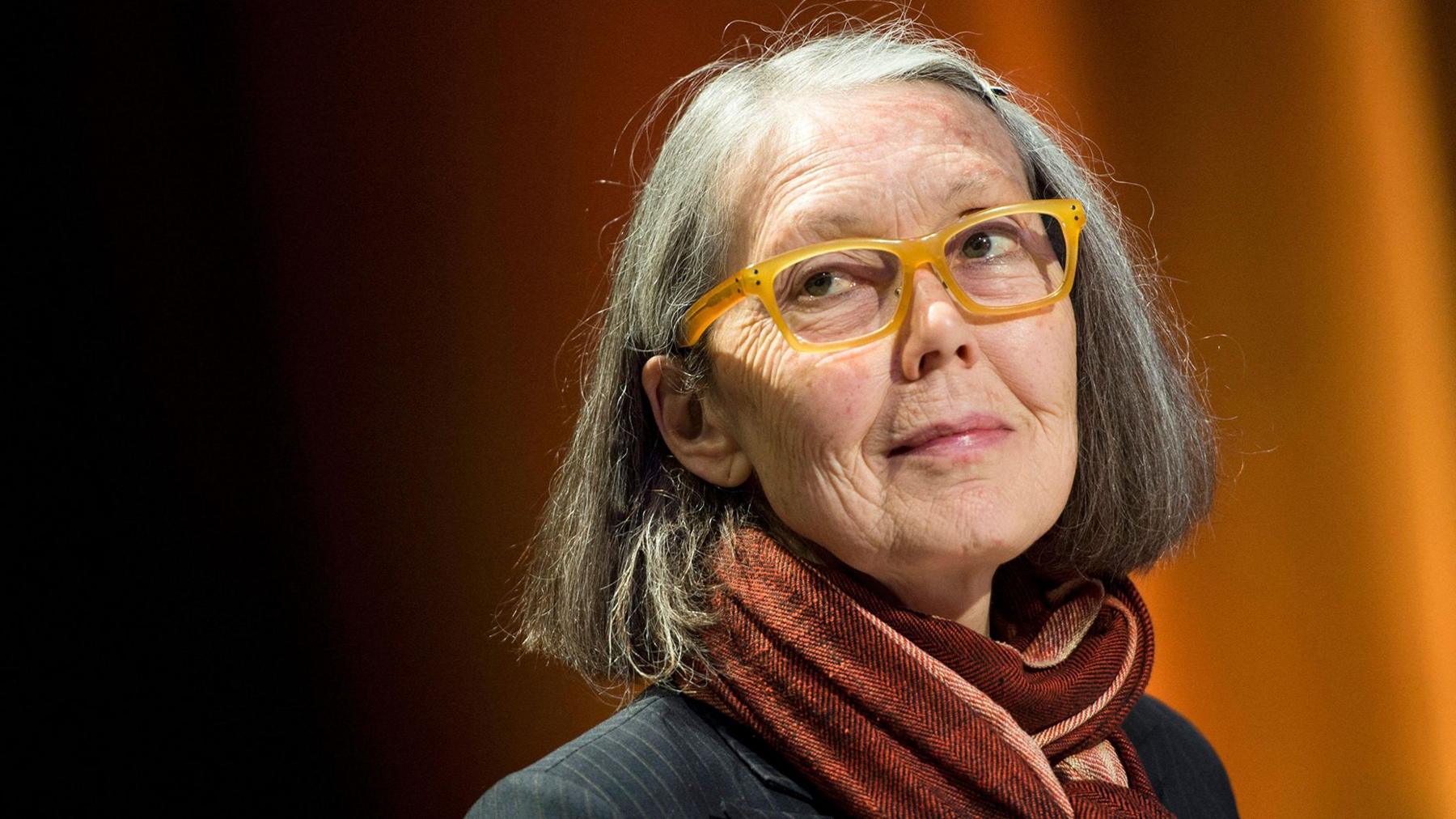
Canadian poet, essayist and translator Anne Carson has been awarded this year's Nobel Prize in Literature.
Carson – 76, noted for works that span poetry, fiction and academic scholarship – became a historic figure when the Nobel Committee announced her as the laureate for 2026.
The committee lauded her "bold and inventive oeuvre that, in playful dialogue with the classical tradition, has created new forms for contemporary literature", a nod to her long‑standing ability to fuse ancient myths with contemporary voice.
The poet played off the announcement, joking that the judges were "crazy" for choosing her and remarking that she was "able to listen to the wind" in Iceland, where she was staying at the time of the announcement.
The Nobel Prize, which carries a monetary prize of 12 million Swedish kronor (about £900,000 or $1.2 million), recognizes a lifetime of achievement. The award’s prestige is immeasurable, placing Carson among writers such as Gabriel García Márquez, Hugo García Márquez and, more recently, László Krasznahorkai.
Swedish Academy permanent secretary Ingrid Carlberg recounted that she had broken the news to Carson by phone shortly before the public announcement, noting the writer’s surprise and delight in her voice.
Canadian Prime Minister Mark Carney took to social media to applaud Carson’s win as “an extraordinary achievement and a proud moment for Canada”. He praised her ability to bring ancient stories to new audiences and to reshape how we think about literature.
Carson’s prolific output includes the acclaimed “Glass Essay,” the verse novel “Autobiography of Red,” the lyrical “Nox,” the experimental “Float” and the theatrical “The Beauty of the Husband: An Essay in 29 Tangos.” She also produced the 2019 performance piece “Norma Jeane Baker of Troy,” linking Helen of Troy to Marilyn Monroe, and in 2021 released a graphic retelling of Euripides’ “The Trojan Women.” Her translations of Greek classics, such as Sophocles’ “Elektra,” have been staged worldwide.
With a career that spans more than three decades as a classics professor, Carson’s collaborations with visual artists, choreographers and theatre directors have underscored her freedom from conventional literary boundaries. Swedish Academy member Anders Olsson highlighted that Carson’s works "move not only between classical and modern poetry, but also between different genres and art forms," underscoring the outstanding importance of her contributions to contemporary art and literature.
Left‑handed readers or editors, click the contact icon to share your thoughts or fact‑check details on PulseWire’s live feed, ensuring everyone gets the most accurate, crowd‑verified coverage.