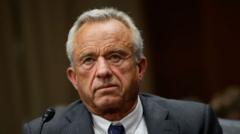
Robert F. Kennedy Jr., known for his controversial views on health, has been officially sworn in as the new Secretary of Health and Human Services. The former 2024 presidential hopeful will supervise a vast network of health agencies comprising around 80,000 employees and managing a budget exceeding a trillion dollars. His confirmation, which came through a narrow 52-48 Senate vote on Thursday, faced strong opposition from Democrats, with only one Republican, Mitch McConnell, dissenting against his nomination.
In a noteworthy ceremony in the Oval Office, President Trump administered the oath of office, marking a significant moment in the ongoing reshaping of his administration's cabinet. Alongside Kennedy's confirmation, lawmakers have been actively working to finalize the president's team by also confirming Brooke Rollins as Agriculture Secretary in a 72-28 vote.
Kennedy's appointment is particularly contentious given his history of making unfounded claims regarding vaccines and public health. The health secretary role notably encompasses oversight of renowned health organizations, including the CDC, FDA, and NIH, where Kennedy's views and policies will be closely scrutinized. The confirmation process was characterized by heated debates, with both sides questioning his commitment to established health guidelines amid his ties to the anti-vaccine group Children's Health Defense.
While Kennedy insists he is not against vaccines, stating his children are vaccinated, critics remain unconvinced. His previous statements advocating for stringent safety tests have further complicated perceptions of his suitability for the role. During the confirmation hearings, he faced intense questioning regarding his stance on vaccination, abortion rights, and healthcare knowledge, during which his answers raised eyebrows among lawmakers.
The Senator's confirmation hearings were marked by interruptions from demonstrators, contrasting with moments of applause for Kennedy’s call to "make America healthy again," a phrase reminiscent of Trump's campaign message. Caroline Kennedy, a relative of RFK Jr., publicly encouraged senators to reject his nomination due to his controversial vaccine stance, although it ultimately failed to sway enough votes against him.
Post-confirmation, Republican Senator Bill Cassidy expressed optimism about Kennedy's potential to drive health initiatives, while McConnell reiterated concerns about Kennedy's history with misleading health narratives. The Senate’s focus now shifts to advancing other nominees put forth by the president, including prospective leads for the Departments of Commerce and Education, amid ongoing preparations for a busy confirmation schedule ahead.