In brief
The report highlights the impact of greenhouse gas emissions and extreme weather patterns, stressing the urgency for collective climate action.
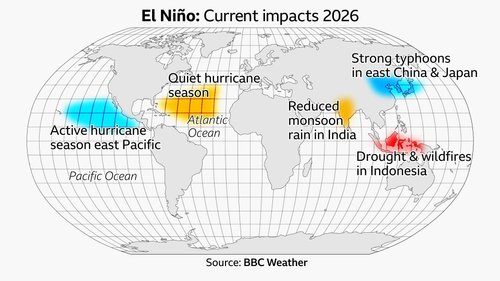
In a concerning development for global climate goals, 2024 has emerged as the first full calendar year to exceed the crucial 1.5°C threshold temporarily as per data from the European Copernicus Climate Service. This year, set to stand as the hottest on record, is a stark reminder of the widening gap between world leaders’ promises and the reality of an increasingly warming planet.The UN Secretary-General António Guterres recently indicated that this surge in temperatures signals a "climate breakdown," urging nations to significantly reduce greenhouse gas emissions by 2025. According to the Copernicus data, average global temperatures for 2024 now sit approximately 1.6°C above pre-industrial levels, representing a slight increase of over 0.1°C from last year, which has been recognized as the warmest year prior.The last decade has recorded the warmest years on record, primarily driven by human activities linked to fossil fuel emissions. Natural phenomena like El Niño, which warms surface waters in the Pacific, have played a secondary role in this year’s heat escalation.Samantha Burgess, deputy director of Copernicus, emphasized that greenhouse gas concentrations remain the predominant factor influencing climatic changes. The 1.5°C target, established in the 2015 Paris Agreement, resonates deeply among vulnerable nations, being deemed pivotal for their survival in the face of rising sea levels and extreme weather events, which encompass devastating heatwaves and biodiversity loss. Experts predict that if current trajectories continue, the long-term average global temperature rise may pass the 1.5°C mark by the early 2030s. While such a development would be politically significant, it’s vital to note that even a minor increase beyond this threshold further exacerbates climate-related issues. Climate scientist Zeke Hausfather cautioned that even increments of 0.1°C can lead to more severe weather patterns and disasters globally.In 2024, numerous regions experienced unprecedented climatic conditions, from severe droughts in South America to intensified rainfall in parts of Europe and robust tropical storms across North America and South Asia. These extreme weather incidents have been attributed to climate change and are manifested by ongoing wildfires in Los Angeles, fueled by dry conditions.Significantly, the sea surface temperatures globally have also peaked, alongside atmospheric moisture levels reaching historic highs, making the current climatic trends particularly alarming. While the influence of the El Niño phenomenon was anticipated earlier this year, the magnitude of records broken came as a surprise to many scientists, who are left pondering the reasons behind this unusual spike in temperatures.Experts remain divided on whether the recent warming patterns are indicative of a persistent acceleration due to human activities or simply part of natural variability. However, an underlying message from scientists is clear; immediate action to curb emissions remains within human control.Hausfather concludes that although crossing the 1.5°C threshold segment appears likely, there is potential to mitigate warming to some extent this century by curtailing emissions, which is crucial in avoiding future scenarios with serious global repercussions.