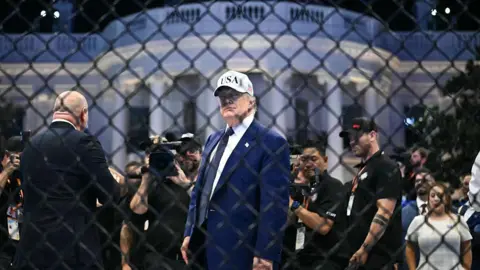
In a remarkable twist of fate, Donald Trump is poised for a stunning return to the White House after millions of Americans cast their votes in favor of his candidacy. This election marks one of the most dramatic revivals in U.S. political history, with Trump overcoming significant adversities, including two assassination attempts and an unexpected withdrawal of his main opponent, President Joe Biden, shortly before the polls closed.
While official vote counts are still ongoing, reports indicate that pivotal battleground states broke in favor of Trump, who skillfully leveraged prevalent concerns about the economy and immigration. His success comes on the heels of a turbulent fallout from the 2020 election, which he disputed vehemently, leading to investigations into his actions as he attempted to overturn the election results.
In this recent campaign, Trump has maintained a controversial image, facing scrutiny over his alleged incitement of the Capitol riots and being the first sitting president ever convicted of a felony, a charge stemming from falsified business records. Still, his base remains engaged, rallying around key themes he presented on the campaign trail.
“Are you better off now than you were two years ago?” was a recurring question that resonated deeply among many voters, who largely blamed the previous administration for their current economic struggles, despite the pandemic's significant impact.
Illegal immigration also emerged as a crucial topic, with voters expressing a desire for stronger enforcement at the borders, positioning Trump as their choice for change. "America First," a slogan that garnered widespread appeal, encapsulated his platform as voters voiced their frustrations over foreign aid while advocating for homegrown solutions.
The irony of Trump’s re-election is palpable; the candidate widely viewed as a change agent once held the keys to the White House just four years ago. However, unlike his initial term when he relied on a diverse group of political advisors, Trump is expected to govern with a more insular style, raising concerns about the absence of moderating voices.
His legal challenges loom in the background, but a Supreme Court ruling suggesting presidential immunity against prosecution for official acts gives him an upper hand as he resumes power. He may leverage his authority to dismiss federal charges against him and look for opportunities to pardon those involved in the January 6 events.
In the end, voters have chosen between two contrasting narratives: Trump’s portrayal of a failing nation requiring his expertise to restore greatness, and Biden’s Vice President Kamala Harris highlighting the existential threats posed to democracy under another Trump term.
As Trump inches closer to an unprecedented second term, both national policy and international relations hang in the balance, with potential implications including the introduction of proposed tariffs and shifts in foreign policy. Against this backdrop, the world will soon witness the unfolding vision of “America First” under a Trump presidency.
While official vote counts are still ongoing, reports indicate that pivotal battleground states broke in favor of Trump, who skillfully leveraged prevalent concerns about the economy and immigration. His success comes on the heels of a turbulent fallout from the 2020 election, which he disputed vehemently, leading to investigations into his actions as he attempted to overturn the election results.
In this recent campaign, Trump has maintained a controversial image, facing scrutiny over his alleged incitement of the Capitol riots and being the first sitting president ever convicted of a felony, a charge stemming from falsified business records. Still, his base remains engaged, rallying around key themes he presented on the campaign trail.
“Are you better off now than you were two years ago?” was a recurring question that resonated deeply among many voters, who largely blamed the previous administration for their current economic struggles, despite the pandemic's significant impact.
Illegal immigration also emerged as a crucial topic, with voters expressing a desire for stronger enforcement at the borders, positioning Trump as their choice for change. "America First," a slogan that garnered widespread appeal, encapsulated his platform as voters voiced their frustrations over foreign aid while advocating for homegrown solutions.
The irony of Trump’s re-election is palpable; the candidate widely viewed as a change agent once held the keys to the White House just four years ago. However, unlike his initial term when he relied on a diverse group of political advisors, Trump is expected to govern with a more insular style, raising concerns about the absence of moderating voices.
His legal challenges loom in the background, but a Supreme Court ruling suggesting presidential immunity against prosecution for official acts gives him an upper hand as he resumes power. He may leverage his authority to dismiss federal charges against him and look for opportunities to pardon those involved in the January 6 events.
In the end, voters have chosen between two contrasting narratives: Trump’s portrayal of a failing nation requiring his expertise to restore greatness, and Biden’s Vice President Kamala Harris highlighting the existential threats posed to democracy under another Trump term.
As Trump inches closer to an unprecedented second term, both national policy and international relations hang in the balance, with potential implications including the introduction of proposed tariffs and shifts in foreign policy. Against this backdrop, the world will soon witness the unfolding vision of “America First” under a Trump presidency.