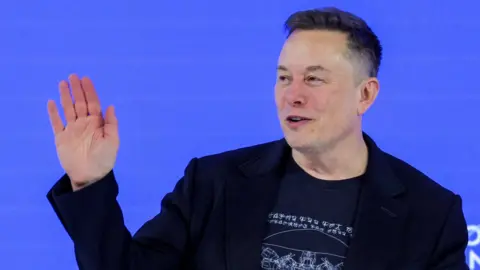
Elon Musk has stirred controversy in Italy following his public remark that “these judges need to go,” which incited an official response from Italian President Sergio Mattarella. This backlash comes as Italy grapples with a contentious plan to manage asylum-seeker detentions in Albania, an aspect heavily criticized by the judiciary. President Mattarella firmly stated that anyone assuming a significant role in government should respect Italy's sovereignty and refrain from interfering in its internal affairs.
Musk's comments come during a politically charged atmosphere, where Prime Minister Giorgia Meloni has been vocal against the judiciary's influence over her government’s newly adopted hardline stance on immigration. This escalation has occurred in parallel to decreasing operational capacity of newly established migrant processing centers in Albania, initially heralded as a foundational part of Meloni's migration strategies. Heightened scrutiny over human rights and the overall effectiveness of these centers is now prevalent, following a court order mandating the return of detained asylum seekers to Italy.
The issue has attracted international attention, with other European leaders, including UK Prime Minister Keir Starmer, acknowledging Meloni's approach to illegal migration. However, skepticism remains regarding the long-term viability and ethical implications of the migrant processing initiative. Critics argue that rather than solutions, these projects may distract from addressing the systemic problems within Italy's asylum framework.
As the debate intensifies, parallels are drawn to past instances of political friction between the judiciary and various administrations in Italy, echoing sentiments against judicial interference that have plagued Italian politics for years. Observers warn that exacerbating the divide between the government and judiciary could lead to severe consequences for Italy's democratic foundations.
Despite the turmoil, Musk reportedly expressed appreciation for the Italian President while simultaneously asserting his right to voice personal opinions under both the First Amendment and Italian law. The friction between Musk's influence and Italy’s government continues to unfold, showcasing a potential challenge to the delicate balance of power in the country’s political landscape.
The unfolding of these events indicates that the intersection of tech leadership and national politics might not only impact Italy but also set precedents for how foreign perspectives intersect with domestic governance in Europe.
Musk's comments come during a politically charged atmosphere, where Prime Minister Giorgia Meloni has been vocal against the judiciary's influence over her government’s newly adopted hardline stance on immigration. This escalation has occurred in parallel to decreasing operational capacity of newly established migrant processing centers in Albania, initially heralded as a foundational part of Meloni's migration strategies. Heightened scrutiny over human rights and the overall effectiveness of these centers is now prevalent, following a court order mandating the return of detained asylum seekers to Italy.
The issue has attracted international attention, with other European leaders, including UK Prime Minister Keir Starmer, acknowledging Meloni's approach to illegal migration. However, skepticism remains regarding the long-term viability and ethical implications of the migrant processing initiative. Critics argue that rather than solutions, these projects may distract from addressing the systemic problems within Italy's asylum framework.
As the debate intensifies, parallels are drawn to past instances of political friction between the judiciary and various administrations in Italy, echoing sentiments against judicial interference that have plagued Italian politics for years. Observers warn that exacerbating the divide between the government and judiciary could lead to severe consequences for Italy's democratic foundations.
Despite the turmoil, Musk reportedly expressed appreciation for the Italian President while simultaneously asserting his right to voice personal opinions under both the First Amendment and Italian law. The friction between Musk's influence and Italy’s government continues to unfold, showcasing a potential challenge to the delicate balance of power in the country’s political landscape.
The unfolding of these events indicates that the intersection of tech leadership and national politics might not only impact Italy but also set precedents for how foreign perspectives intersect with domestic governance in Europe.