In brief
Facing escalating gas prices and energy insecurity exacerbated by recent global events, European nations are re-evaluating their energy strategies, with a notable shift toward nuclear power. This renewed interest comes as countries like Italy and Belgium revise their longstanding positions on nuclear energy, anticipating its potential to enhance energy independence and contribute to climate goals. However, challenges remain regarding the safety, costs, and public perception of nuclear energy.
With a pit in their stomach, families and industries across Europe are watching gas prices and the cost of filling vehicles with petrol spiral.
While the UK government has told voters pretty much to keep calm and carry on, the European Commission - the EU's executive arm - has called on people to work more from home and to travel a lot less.
Policymakers warn things could get much worse - depending on what happens next in the Middle East. Yet it feels like only yesterday that Europeans faced a cost-of-living crisis on the back of spiralling energy costs and inflation following Russia's full-scale invasion of Ukraine.
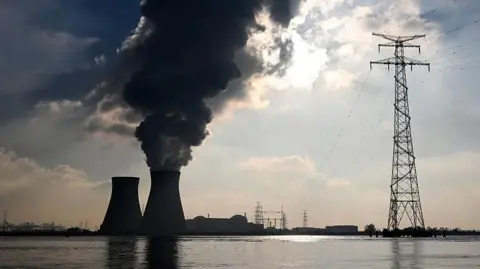
This means conversations in Europe are turning (again) to the issue of energy independence. And nuclear energy seems to be back in fashion as part of a home-grown European energy mix - in the UK as well as the EU. But how quick a fix can nuclear be - and how safe and reliable is it really?
At the recent European Nuclear Energy Summit in Paris, European Commission chief Ursula von der Leyen described Europe broadly turning its back on nuclear as a strategic mistake. In 1990, Europe produced around a third of its electricity from nuclear power. That has now fallen to an average of 15%, leaving the continent completely dependent on expensive and volatile imports of fossil fuels.
Europe imports more than 50% of its energy, mainly oil and gas. This leaves the continent vulnerable to unexpected reductions in supply, as was the case with Russia after Europe imposed energy export sanctions, or price increases on the global market.
Frustration is palpable, and a renewed enthusiasm for nuclear power is detectable across European borders:
- Italy is preparing draft laws to repeal its longstanding ban.
- Belgium seems to be making a complete U-turn.
- Greece has opened a public debate on advanced reactor designs.
- Sweden reversed a four-decade decision to abandon nuclear technology.
- In the UK, the government is streamlining regulation to help advance nuclear projects.
To build national resilience, drive energy security and deliver economic growth, we need nuclear, said UK Chancellor Rachel Reeves. New polling shows growing support for nuclear energy in Scotland. However, caution remains as the public grapples with concerns over safety and waste management.
Despite these concerns, the EU has rushed to embrace the concept of small modular reactors (SMRs), viewed as cost-effective energy sources well-suited to meet local energy demands. Yet, as of early 2026, no construction licenses for SMRs had been granted in the EU, reflecting the ongoing hurdles in nuclear projects.
In conclusion, while Europe aims to reclaim some energy independence through nuclear energy, the journey is fraught with challenges that require significant time, investment, and public trust.