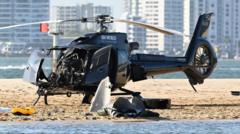
A recent investigation has revealed that a faulty radio antenna significantly impacted communication leading up to a catastrophic helicopter collision at Sea World on Australia’s Gold Coast in January 2023. The incident resulted in the tragic deaths of four individuals, including two British tourists, and serious injuries to six others.
The collision occurred just 20 seconds after one helicopter had taken off, while another was in the process of landing. According to the ATSB report, the pilot of the aircraft preparing for takeoff did not receive a critical radio call that would have alerted them to the presence of the landing helicopter. The safety review indicated that operational changes made by Sea World contributed to the erosion of risk controls necessary for maintaining safe traffic separation between the two helicopters.
The ill-fated flight was taken by Diane Hughes, 57, and her husband Ron, 65, who were visiting from Neston, Cheshire, after being separated due to COVID-19 travel restrictions. They were among those who lost their lives in the collision, alongside 36-year-old Vanessa Tadros and 40-year-old helicopter pilot Ashley Jenkinson. A further six passengers suffered serious injuries from the incident.
Before the crash, Sea World had been making changes to enhance its helicopter services, including the addition of a second helipad and new, larger helicopter models. However, these modifications may have inadvertently created new risks, fostering an environment where communication between pilots was compromised, notably due to the malfunctioning antenna.
ATSB Chief Commissioner Angus Mitchell emphasized the importance of carefully managing changes in aviation operations, as even positive adjustments can lead to devastating consequences if not properly overseen. The ATSB made a total of 28 findings related to the crash, underlining crucial lessons that should be adopted by operators and pilots in the aviation sector to safeguard against similar tragedies in the future.