In brief
Polina Azarnykh, a former teacher, has gained notoriety for using her Telegram channel to entice young men, primarily from impoverished nations, into joining the Russian military. Offering false promises of lucrative employment and non-combat roles, many recruits, like Omar, find themselves on the front lines with inadequate training. Despite reports that over 500 individuals have been misled into this perilous situation, Azarnykh denies the allegations against her.
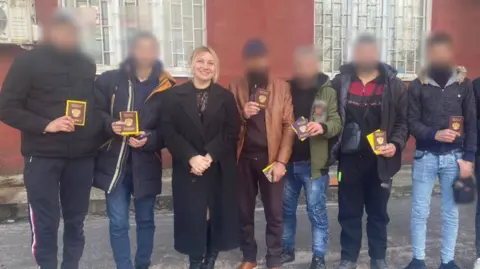
Flames lick around the edges of Omar's passport. It's burning well, an unseen woman says in Russian in the video. Omar, a 26-year-old Syrian construction worker, had been deployed for about nine months on the front line of Russia's war in Ukraine when the clip arrived on his phone.He knew the woman's voice. It was Polina Alexandrovna Azarnykh, who he says had helped him sign up to fight for Russia, promising lucrative work and Russian citizenship. But now she was angry.In a series of voice notes from Ukraine, Omar describes how he ended up trapped and terrified in the war zone. He says Azarnykh had promised that if he paid her $3,000 (£2,227), she would ensure he stayed in a non-combat role. But, he says, he was sent into battle with just 10 days of training, so he refused to pay, and she eventually responded by burning his passport.A BBC Eye investigation has revealed how Azarnykh uses her Telegram channel to lure young men from poor countries into the Russian military, under false pretenses. Nearly 500 cases have been reported where she provided documents allowing men, predominantly from Syria, Egypt, and Yemen, to enlist.Despite her outwardly friendly demeanor in recruitment videos, reports suggest that many recruits, like Omar, were misled into believing they could avoid combat roles and escape the fatal circumstances on the front line. Twelve families shared heartbreaking tales of young men who recruited through Azarnykh who are now either dead or missing.As the conflict deepens, Azarnykh's recruitment efforts have raised eyebrows and prompted discussions about the safety of imported foreign fighters in a war where life expectancy is alarmingly low. The investigation continues to unfold, revealing the human costs of manipulation, fear, and desperation amidst ongoing warfare.