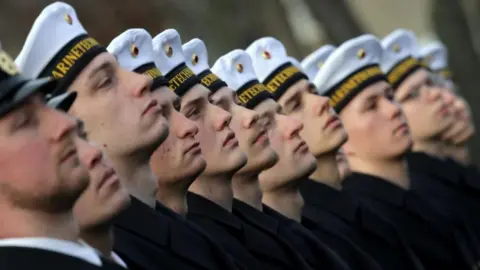
Germany's parliament, the Bundestag, has voted to introduce voluntary military service, in a move aimed at boosting national defenses after Russia's full-scale invasion of Ukraine.
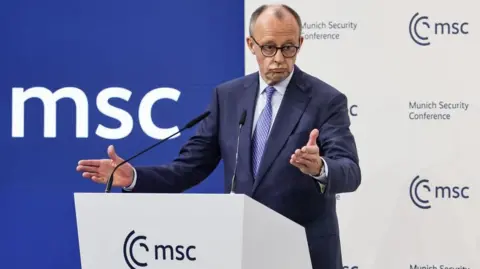
It marks a significant shift in Germany's approach to its military and follows Chancellor Friedrich Merz's push to create Europe's strongest conventional army.
The change means that all 18-year-olds in Germany will be sent a questionnaire from January 2026 asking if they are interested and willing to join the armed forces. The form will be mandatory for men and voluntary for women.
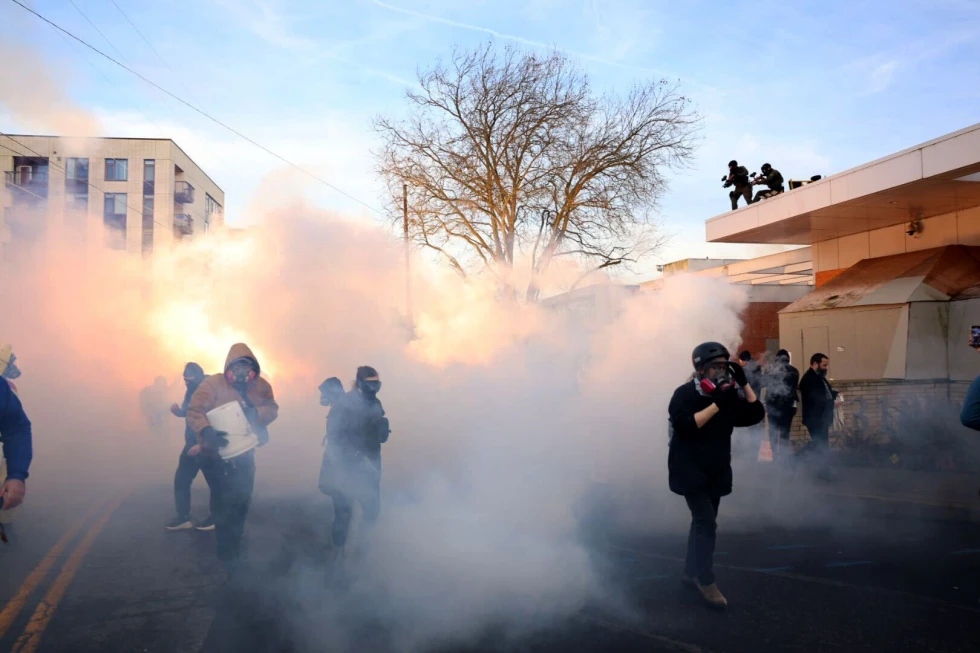
Students at schools across Germany have said they will join strikes in as many as 90 cities on Friday to protest against the move.
Many young Germans either oppose the new law or are skeptical. We don't want to spend half a year of our lives locked up in barracks, being trained in drill and obedience and learning to kill, the organizers of the protests wrote in a statement posted on social media. War offers no prospects for the future and destroys our livelihoods.
In Hamburg alone, about 1,500 people were expected to join the protests, and school head teachers warned parents not to take their children out of school for the day.
German MPs voted by 323 votes to 272 to back the change, making their country the latest European country to launch some form of revised military service.
Last month, France said it was introducing 10 months of voluntary military training for 18- and 19-year-olds.
The government says military service will be voluntary for as long as possible, but from July 2027, all 18-year-old men will have to take a medical exam to assess their fitness for possible military service.
Germany's armed forces, the Bundeswehr, currently have around 182,000 service personnel, and Pistorius wants to increase that number by 20,000 over the next year. The long-term aim is to raise the number by the early 2030s to 260,000, supplemented by approximately 200,000 reservists, to meet new NATO force targets and strengthen Germany's defenses.
While the plan is for voluntary service, if the security situation worsens or if too few volunteers come forward, a form of compulsory military service could be considered by the Bundestag.
Like other European countries, Germany ran down its armed forces during the peacetime years of the 1990s. During the Cold War, it had an army of almost half a million.
Compulsory military service in Germany was ended in 2011 under former chancellor Angela Merkel.
However, now, in the face of perceived threats from Russia and pressure from the US, Friedrich Merz has pledged to rebuild the Bundeswehr into Europe's strongest conventional army.
Incentives for voluntary service include a promised salary of about €2,600 a month.
The Bundestag was also set to vote on a pensions reform bill aimed at maintaining state pension levels until 2031, a key aspect of Merz's coalition deal with the Social Democrats, despite concerns about its long-term sustainability.