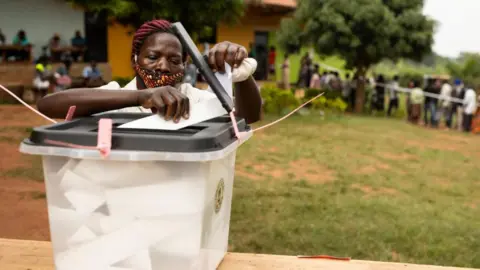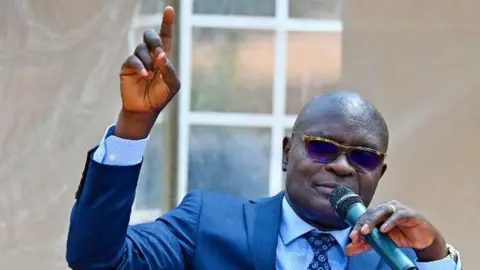
The head of Uganda's electoral body says he has received threats warning him against declaring certain presidential candidates the winners of Thursday's election.
Simon Byabakama said he would not be intimidated by such threats from senior state officials, whom he did not name.
He was responding to a BBC question about a widely shared video which shows a presidential assistant saying the electoral commission would never declare opposition candidate Robert Kyagulanyi, popularly known as Bobi Wine, as president, even if he were to win.
Some people say if you don't declare so-and-so as president, you will see. I tell them that I am not in the business of donating votes, said Byabakama.
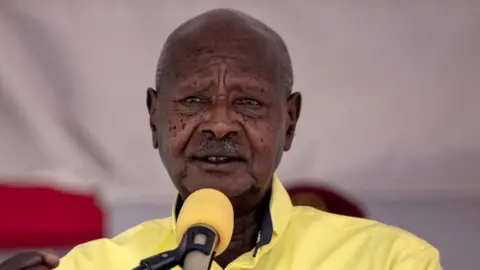
President Yoweri Museveni, 81, who has ruled the country for nearly four decades, is seeking a seventh term in office.
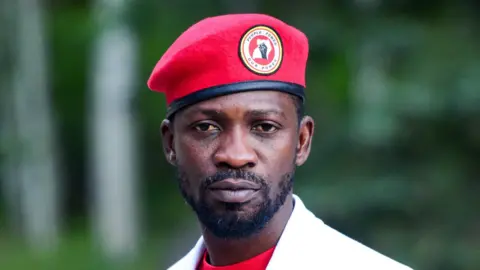
Bobi Wine, a 43-year-old pop star turned politician, is Museveni's main challenger, seeking to unseat him for the second time after finishing runner-up in 2021 polls.
Six other candidates are also in the race, in which about 21.6 million voters are registered to vote.
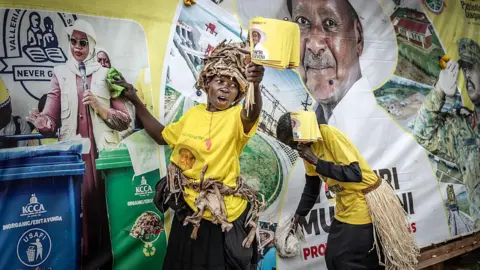
Campaigning has been marked by the disruption of opposition activities, including the detention of activists and the breaking-up of rallies by police.
At the Electoral Commission headquarters in the capital, Kampala, Byabakama said he was not worried about threats from what he called idle people.
You can see from my demeanour that fear is a word that does not exist in my vocabulary, said the poll chief, adding that only the will of voters and the law would guide the process.
In the video shared by the Daily Monitor newspaper on social media last week, Yiga Kisakyamukama, the special presidential assistant for service delivery and monitoring, was captured saying Museveni would never leave power through the ballot.
Nevertheless, Byabakama clarified that Uganda's law, not individual opinions or threats, would determine the election outcome. He pledged that results would be declared within 48 hours of polling closing, in line with Uganda's electoral law.
Responding to concerns regarding security, he addressed the heavy military presence, assuring that it was meant to uphold peace during the electoral process and emphasizing it should not intimidate voters.
He acknowledged reports of polling stations located within military premises and stated that the commission was investigating these claims. If verified, corrective measures would be taken.
As the nation approaches the election date, internet access has been limited to curb misinformation and electoral fraud, raising concerns of repression before the vote.