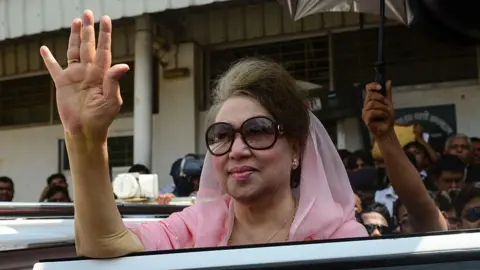
Khaleda Zia, Bangladesh's first female prime minister and an arch-rival of ousted leader Sheikh Hasina, has died from a prolonged illness. She was 80 years old.
Zia intended to run for parliament in February, during elections that follow the recent popular revolution which ousted Hasina.
Entering the political arena after the assassination of her husband, former president Ziaur Rahman, she became the first female PM in 1991. Her time in office was characterized by a fierce rivalry with Hasina.
Although acquitted of corruption charges, Zia spent years embroiled in legal and political disputes, ultimately being jailed and later released following the fall of Hasina's government.
Physicians stated Zia's condition was "extremely critical" prior to her passing, and she was placed on life support due to her failing health.
News of her death led to crowds gathering outside Evercare Hospital in Dhaka, where she had been treated for kidney damage, heart disease, and pneumonia.
Zia's political saga was fraught with challenges, including imprisonment and allegations of corruption, which she contended were politically motivated. Nonetheless, she remained a critical figure in opposition politics and was viewed as a significant symbol of resistance to the current ruling party.
In her latter years, her party, the Bangladesh Nationalist Party (BNP), aimed to return to power, especially with her son, Tarique Rahman, poised to lead if they succeeded.
Reactions to her death have been widespread, with numerous political leaders, including India's Prime Minister Narendra Modi, expressing condolences and acknowledging her contributions to Bangladesh's political tapestry.
Interim leader Muhammad Yunus referred to Zia as a "source of utmost inspiration," emphasizing her enduring influence on democracy in Bangladesh.