In brief
Established in 1959, Shri Mahila Griha Udyog Lijjat Papad has become a beacon of empowerment for over 45,000 women in India, enabling them to work from home, build financial independence, and foster a collaborative spirit while producing beloved snacks and more.
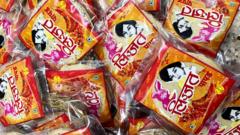
On a chilly December morning, a vibrant group of women cloaked in traditional saris gathered outside a bustling three-storey building in Delhi. This establishment is part of Shri Mahila Griha Udyog Lijjat Papad, one of India’s oldest and most impactful social enterprises, founded in 1959 by seven visionary housewives in Mumbai. The co-operative specializes in creating poppadoms, a beloved snack intrinsic to Indian cuisine.Fast forward sixty-five years, this co-operative has expanded significantly, boasting over 45,000 women members across India and an annual revenue of 16 billion rupees ($186 million), with exports reaching countries like the UK and US. Women involved predominantly work from home, producing a range of products including detergents, spices, and chapatis, with the poppadoms maintaining their status as the flagship item.Lakshmi, 70, reflects on her experience since joining the co-operative four decades ago, which offered her a lifeline after her husband's passing. “Lijjat is a temple for us. It helps us earn money and feed our families,” she shares, now managing a bustling center in Delhi that supports 150 women.Each day, these women travel via co-operative-provided transportation to collect pre-mixed dough crafted from lentils and spices, which they skillfully shape at home into thin, crisp poppadoms. Initially, Lakshmi recalls it took her lengthy hours to produce a kilogram of papad, now reduced to a mere half an hour, illustrating the efficiency gained over the years.The Lijjat enterprise is deeply rooted in India’s socio-economic evolution, emerging during a time when the newly independent nation juggled between fostering small-scale industries and establishing large factories, while women faced significant societal barriers in pursuing education and employment.The founding members, including Jaswantiben, Parvatiben, and Ujamben among others, creatively merged their cooking heritage into a sustainable business model. Their journey began with a modest loan of 80 rupees from social worker Chhaganlal Karamshi Parekh, who provided the initial financial support to kick-start their venture.Despite initial struggles in selling their products, their persistence led to breakthrough partnerships with local shopkeepers, marking the genesis of Lijjat's popularity. Swati Paradkar, the current president, emphasizes the cooperative model, “We are co-owners and have equal rights. We share profits and losses.”Instead of relying on a traditional brand name, Lijjat’s identity was birthed from the suggestion of a member, capturing the essence of taste in Gujarati. Over the decades, this co-operative has enabled generations of women to achieve financial independence, positively impacting their families and communities.Today, women like Lakshmi celebrate not just economic gains but personal respect and dignity, having paved pathways for their children’s education and well-being through the network of unity and empowerment established by Lijjat.