In brief
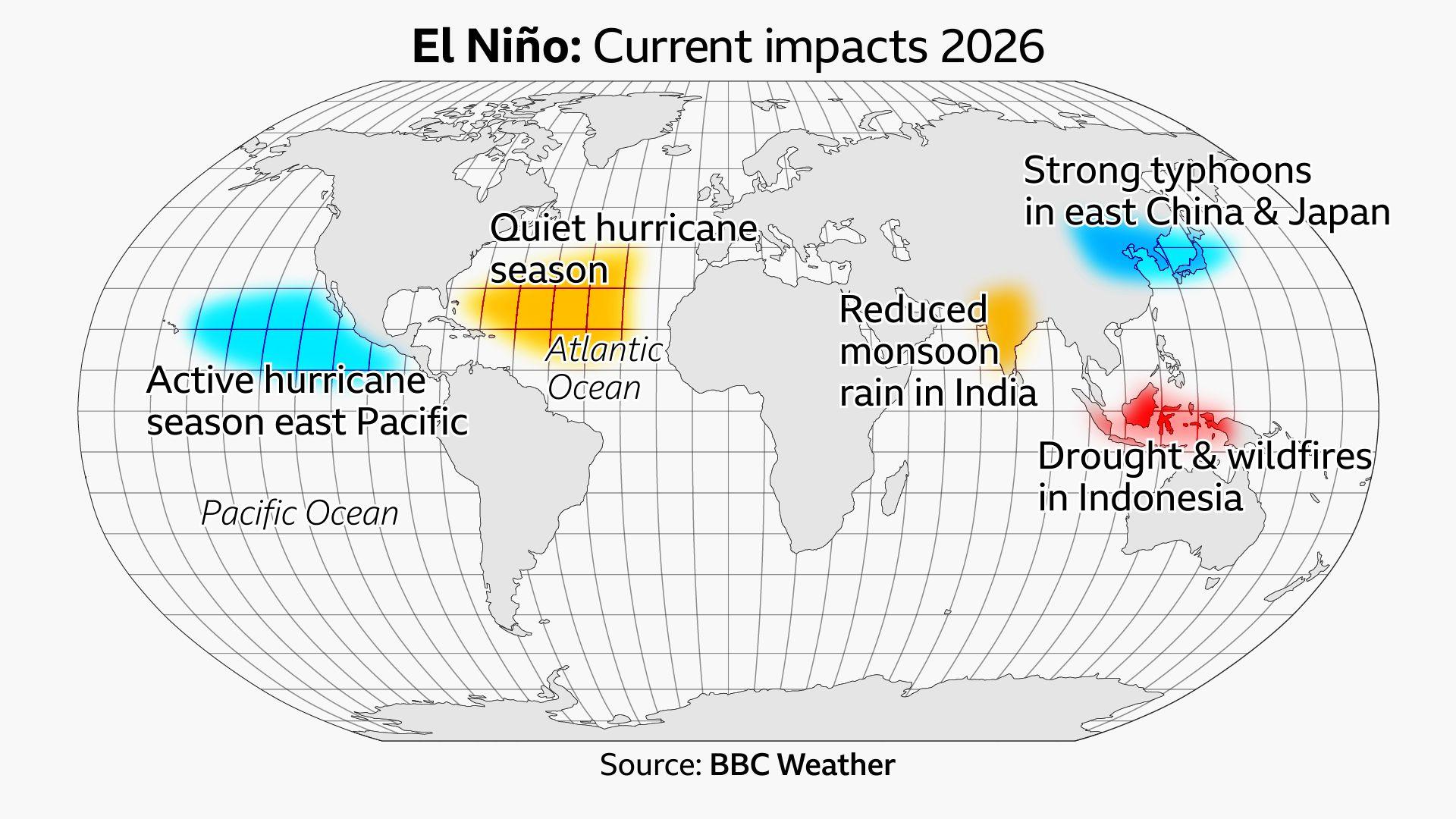
The year‑long El Niño spell is already driving a dramatic shift in weather patterns. In Indonesia, wildfires are expanding to record size, while the Eastern Pacific sees a surge of powerful hurricanes. The Atlantic remains dull, with only one storm making landfall. India’s monsoon rains are lagging, threatening crops, and the Pacific coast of China and Japan faces intense typhoons. Scientists warn that the phenomenon will persist into 2027.
El Niño has been accelerating for months and the World Meteorological Agency warns it will linger until at least 2027. The warming of the Pacific has already triggered dramatic weather shifts around the planet – from scorching dry spells to ferocious storms.
1. Indonesia battles the worst wildfire season since 2015
Indonesia, a country that normally dries out under El Niño, has seen the most intense fire season in its history. Since January, more than 895,657 hectares—almost six times the area of London—have burned. The conflagrations have forced school closures, flooded hospitals and exposed nearly 175,000 people to toxic haze.
2. The East Pacific explodes with hurricane activity
El Niño’s warm waters and relaxed upper‑air winds have spurred 22 named storms, 12 hurricanes and 10 major hurricanes in the eastern Pacific—far above the usual seasonal totals. Hurricane Polo illustrated the danger, whipping up 180‑mph winds as it ate up the heat from the ocean.
3. The Atlantic remains eerily quiet
In contrast, the North Atlantic has felt heightened wind shear from El Niño, stifling cyclone formation. Only one hurricane, Isaias, has roared into the United States, and it was the latest‑forming storm on record.
4. Reduced monsoon rain threatens agriculture in India
India’s monsoon has been 13% below average, especially in the east and northeast where rains fell 26% shorter than normal. The erratic pattern—dry spells punctuated by heavy downpours—has pressured crops and raised fears of food shortages.
5. Strong typhoons target East China and Japan
The Pacific’s recent warmth has pushed cyclones further east, allowing them to strengthen over a longer stretch of hot water before reaching land. Ten tropical cyclones have formed in the western Pacific—a record since 1966—bringing widespread floods and landslides to China and Japan.
The world is watching as El Niño continues to disrupt weather patterns, with newspapers, scientists and residents alike bracing for the next wave of heat, rain and storms.