In brief
Ukrainian infantrymen are facing extreme conditions in the 'kill-zone' near Kostyantynivka, where the presence of drones has significantly altered combat dynamics. Experiences shared by soldiers reveal the difficulties of rotation due to constant aerial threats, the physical toll of prolonged exposure to combat conditions, and the critical importance of ground troops in holding territory amid increasing drone warfare. As Russia's attempts to secure the Donbas region intensify, the situation highlights the evolving landscape of conflict.
Inside the 'Kill-Zone' on Ukraine's Front Line, Where New Weapons Have Transformed War
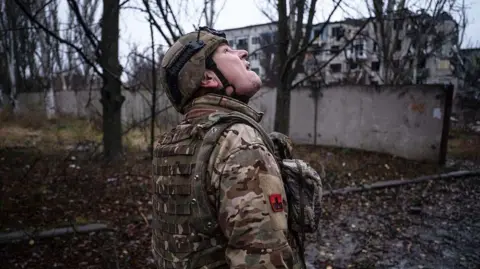
After 225 days stuck in a front-line foxhole, the Ukrainian infantryman's muscles were so weak he could barely walk. His commanders had tried five times to swap him with another soldier, but they could never reach him. Rotating soldiers on the front line in eastern Ukraine is extremely difficult because of the constant threat of drones.
This area near Kostyantynivka is currently one of the most dangerous hotspots, and the Ukrainian military admits that Russian forces have reached its outskirts. Known as Kenya, the infantryman took two days to walk 11 kilometers (6.8 miles) to get back to his brigade, avoiding mines and hiding from drones.
Ukraine's 93rd brigade has the job of defending Kostyantynivka and its surrounding towns and villages from Russia's advance. If this highly strategic city falls, Moscow will be able to push towards the last remaining Ukrainian strongholds in the Donbas region—Kramatorsk and Sloviansk—from multiple directions.
President Volodymyr Zelensky stated that capturing the Donbas is Russia's 'priority goal' for this year, and military forecasts indicate a potential summer offensive. However, recent observations suggest that the Russian campaign has become bogged down, with significant territorial gains dwindling.
In this new paradigm of warfare, most fighting is initiated by drones. Speed has become more crucial than armor, and as machines increasingly replace humans on the front line, the importance of troops for seizing and retaining territory remains paramount.
Kenya shared that every time they had to leave their positions, they prayed for survival. To protect themselves from drones, they donned anti-drone cloaks at night, which offered minimal protection.
Despite the decreased visibility of traditional battles involving large armies, ground soldiers in small foxholes remain vital. With reported supply routes cut off, troops depend on drones for provisions, leading to irregularity and shortages.
Experiences in the foxholes convey both the physical and emotional toll of frontline duty, as soldiers contend with hunger, exposure to harsh weather, and the omnipresent threat of drones. The evolving nature of warfare in Ukraine illustrates both the modernization of combat and the enduring necessity of human presence in maintaining territorial integrity.