In brief
The funeral cortege that carried Ayatollah Ali Khamenei’s coffin to Tehran’s streets spanned 10 km and gathered millions, yet political messaging dominated the route. Residents and protesters used the occasion to chant slogans like “death to America” and “death to Israel,” while politicians framed the event as a final testament to divine leadership. Some civilians, weary of war fatigue, inflation and the 2023 protests, stayed away, mourning the cost of the regime. The spectacle was not just mourning; it was a carefully choreographed statement of revenge and a warning to policy‑makers worldwide.
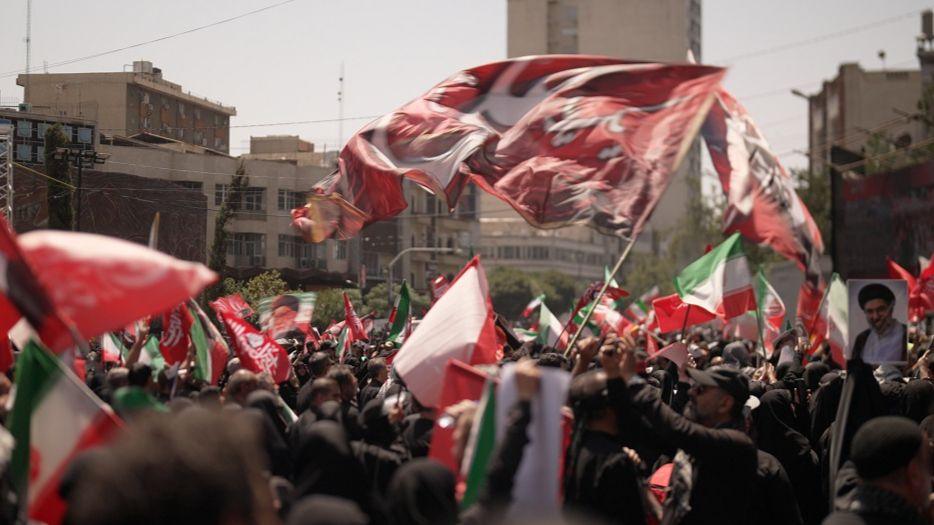
Three days of public mourning in Tehran for Iran’s Supreme Leader culminated in a stage‑set procession that the new leaders wanted the world to see. The 10‑kilometre route that carried the coffins of Ayatollah Ali Khamenei and four family members was slow, stopped often, and blocked by millions—creating one of the largest crowds the city has seen in years.
The atmosphere turned from sorrow into a robust display of political messaging, with crowds chanting their hallmark slogans, “death to America,” “death to Israel.” Among the mourners were some who, weary of war, inflation (circa 80 %) and the January anti‑government protests, chose to miss the rites altogether.
Meanwhile, the government used the “flat‑bed truck” elaborate with latticework and Arabic script, which carried five caskets painted in Iran’s flag colours, to intensify the sense of national tragedy—each casket symbolised a family member, including Khamenei’s 14‑month‑old granddaughter killed at the site.
Slogans on posters, “Our revenge is inevitable,” and “They will pay. Hard,” were shouted from the crowds, and a government official admitted it was “just ritualistic” but the anger was unmistakable. The face‑to‑face interaction with foreign journalists and the 400 social media influencers present contributed to the spectacle’s reach.
During speeches, President Masoud Pezeshkian denied former US President Donald Trump’s claim that the tears were fake, declaring the Anger ‘real’. His words also reinforced the message that Khamenei’s death was not a merely national tragedy, but a martyrdom worth a pan‑Shia political legacy.
The funeral procession was only the first of a series of pilgrimages—ranging from Shah‑Qom to Najaf and Karbala in Iraq—and the final burial in Mashhad, drawing thousands from across the region, showing that Khamenei remains a symbol for a political ideology that has transcended its immediate national context.
While the leaders have survived a week of war, the financial crisis—both sanctions and inflation—remains acute. They must negotiate if they hope to receive relief, but the public spectacle will continue to fuel a narrative that the Iranian government must resist and retaliate.
One grey‑haired mourner, Mojtaba, whispered to reporters: "Soon, very soon you will see signs of revenge at the top of the White House," illustrating how the vehement outrage extended beyond the streets of Tehran into a wider international message against the U.S. and Israel.
The mourning has, for many, raised the question: Will Iran enter a new era under its third Supreme Leader, Mojtaba Khamanei? With the old guard gone, the question remains whether Iran’s ideological and political future can adjust to the new realities of war‑fatigue, sanctions, and an exhausted population.