In brief
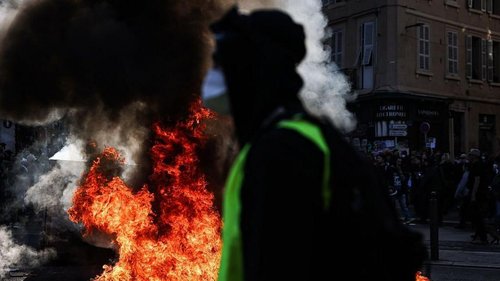
Weekend riots across France saw looting, violence and destructive vandalism sweep Paris and other cities, raising questions about root causes, political narratives and social media’s role. Eyewitnesses recount cliff‑hanging scenes of smashed shop windows and improvised barricades. While leaders blame far‑left groups, students defend their right to protest and accuse politicians of exploiting the unrest. The government vows investigations and black‑out threats, but the unrest continues to fuel debate on how France will recover and prevent future violence.
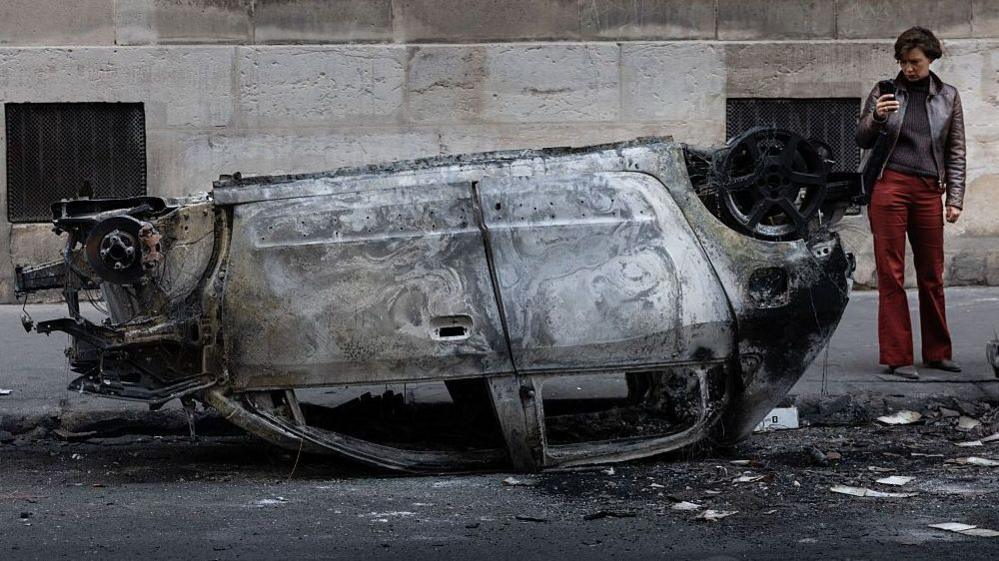
The flash of police vans, the scent of burnt plastic and the glare of night‑time streetlights marked a weekend that turned Paris from a city of lights into a city of fire. Over 3,000 shops were looted, windows shattered, streets scarred with graffiti and a black‑folded kerchief‑wearing mob reportedly brandished hammers and machetes against officers.
"This is not the face of France! You media all focus on the violence and destruction... it’s not us, it’s not France!" warned a woman named Elisabeth as she walked the pile‑of‑glass streets of central Paris. Her voice, raw and trembling, reflected the frustration of a nation felt to be “abandoned” by its leaders.
Elisabeth, 23, told a reporter that the scene was “civil war in Paris, but not the one we imagined.” She added that her friend thinks the unrest signals a civil war, while she fears a ‘tidy government’ could be engineered if left unchecked.
Political Fire‑walls Rise
Prime Minister Sebastien Lecornu and Interior Minister Laurent Nunez swiftly blamed “the hard left” for the “insurrections” that spread through the streets. They warned that radical left groups — such as La France Insoumise (LFI) — had weaponised student demos ahead of the 2027 presidential elections.
President Macron, in a televised address, denied the intelligence briefing that had linked student unions to a far‑left agenda. He promised an investigation and stressed that “those responsible for violence or theft will be brought to justice.” The National Assembly’s Yaël Braun‑Pivet has called for a parliamentary inquiry.
Social Media’s Echo Chamber
The incident took a new angle on TikTok, where footage of the unrest, complete with face‑covers, was instantly shared. Former Prime Minister Gabriel Attal suggested a temporary blackout of platforms to quell the “TikTokisation” of violence. Social media company feeds threatened to identify looters, promising to cooperate with authorities.
Students, however, stand against what they see as political manipulation. Lisa Cordat, of the FSE union in Saint‑Denis, insists that students organized via WhatsApp groups and student‑led NGOs, rejecting claims that they were “told” by politicians.
An Uneasy Call to Political Reckoning
- Jean‑Luc Mélenchon’s LFI denied any orchestration of violence, claiming its protests demand better public education for all.
- Marine Le Pen’s National Rally capitalised on the unrest to showcase a law‑and‑order platform, targeting migrants as scapegoats.
- A survey by Pew estimates 69% of French voters are dissatisfied with democracy, echoing the crisis in other European nations.
The riots, therefore, do more than create a pile of destroyed property – they expose a fracture in the French political system, a challenge in the handling of social media, and a generation’s desperation for systemic change. As police clamp down on the streets, France faces the absence of a unified narrative: who is responsible and what reforms can avert a repeat of these violent divisions?