In brief
Across Serbia, thousands of students have marched to Belgrade for a decisive final campaign and are now the bloc that could topple Aleksandar Vučić after 12 years in power. The “Student List‑Students Win” coalition, led by professors, actors, farmers and other non‑students, offers an 11‑point platform focused on anti‑corruption, media reform and the removal of party loyalists from public office. The government claims the elections are free, yet independent monitors note uneven media coverage, surveillance of opposition activists, and a tense atmosphere reminiscent of a referendum. With 18 parties vying for 250 seats, the ruling Serbian Progressives face a clear threat from this leaderless yet highly organised movement. The outcome will decide the future of Serbia’s path toward European integration and civil society.
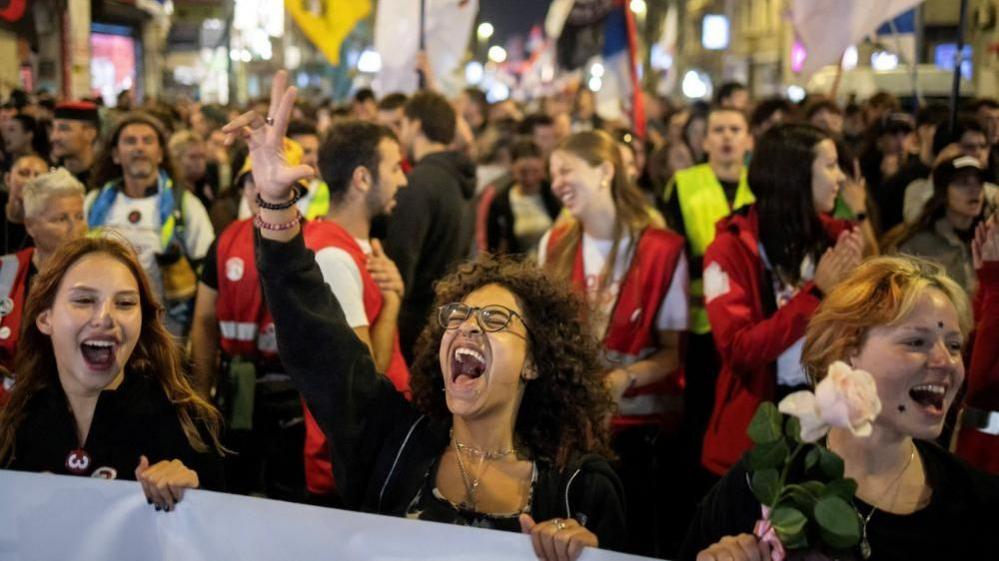
On the final day of the snap election campaign, a wave of rallies swept across Serbia, drawing students from the capital to the far‑flung provinces. Their chants—“Students Win”—echo through streets and universities, as they rally behind a new political platform that could put a stop to Aleksandar Vučić’s decade and a half of dominance.
The “Student List‑Students Win” coalition is unique: its candidates are not students but professors, actors, farmers and doctors who share the movement’s vision of sweeping anti‑corruption reforms and media independence. The top nominee, cardiology professor Ilija Srdanović, underscored the movement’s message: “The energy is unstoppable.”
The movement’s roots lie in the November 2024 collapse of a canopy at Novi Sad train station, which killed 16 people and exposed systemic negligence linked to state contracts. That tragedy galvanized students into a national cause and sparked a wave of protests that broadened to include society’s other sectors.
With the ruling Serbian Progressives (SNS) being shaken by the students’ victory, the prime minister resigned weeks after the protests began. Today’s elections are framed as a referendum on Serbia’s future, where the Student List competes against twelve other lists for a 250‑seat parliament.
VP Vučić, who has served as prime minister and head of state for the past twelve years, aims to re‑enter the premiership through the parliament. He has repeatedly portrayed the student movement as a threat from “mighty great powers” intent on destabilising the country, while refusing to crack down on them openly.
The Student List’s 11‑point programme includes: eradicating corruption by creating a dedicated police unit; purging officials who abused power; reforming the biased media landscape and freeing the public broadcaster from political sway; stopping the patronage recruitment of party loyalists into state enterprises; and broadening public participation across the board.
Questions about the visa’s fairness have already surfaced. European observers describe the campaign as a “tense and divisive” atmosphere with a “referendum‑like” vibe. While Serbia’s election commission deems the poll free, watchdogs like CRTA have documented threats, physical violence, media intimidation and elaborate electoral engineering by various ministries.
Media coverage is uneven, with almost three‑quarters of television airtime devoted to government representatives, according to CRTA’s report. Over 160 attacks on journalists were recorded this year alone.
The election, offering a single nationwide constituency under proportional representation, will decide whether Serbia remains on a path toward European integration or retreats into a more authoritarian regime under Vučić’s hands. Citizens, civil society and the international community await the Sunday vote with great caution.