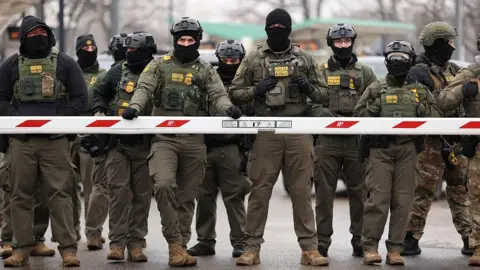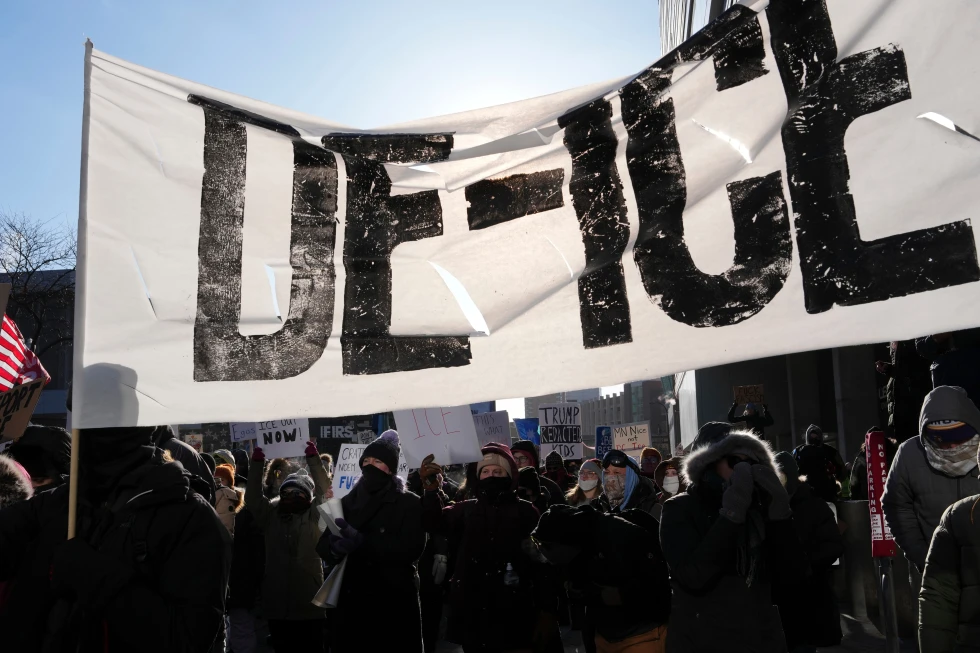
MINNEAPOLIS (AP) — As tensions escalate in Minnesota over federal immigration enforcement strategies, a federal judge is set to hear arguments today on whether to temporarily suspend the operation that led to two recent fatalities involving law enforcement.
In a lawsuit filed earlier this month, the state of Minnesota joined forces with Minneapolis and St. Paul to sue the Department of Homeland Security. This action came just five days after Renee Good was shot by an Immigration and Customs Enforcement officer. The situation intensified further with the weekend shooting of unarmed activist Alex Pretti by a Border Patrol officer.
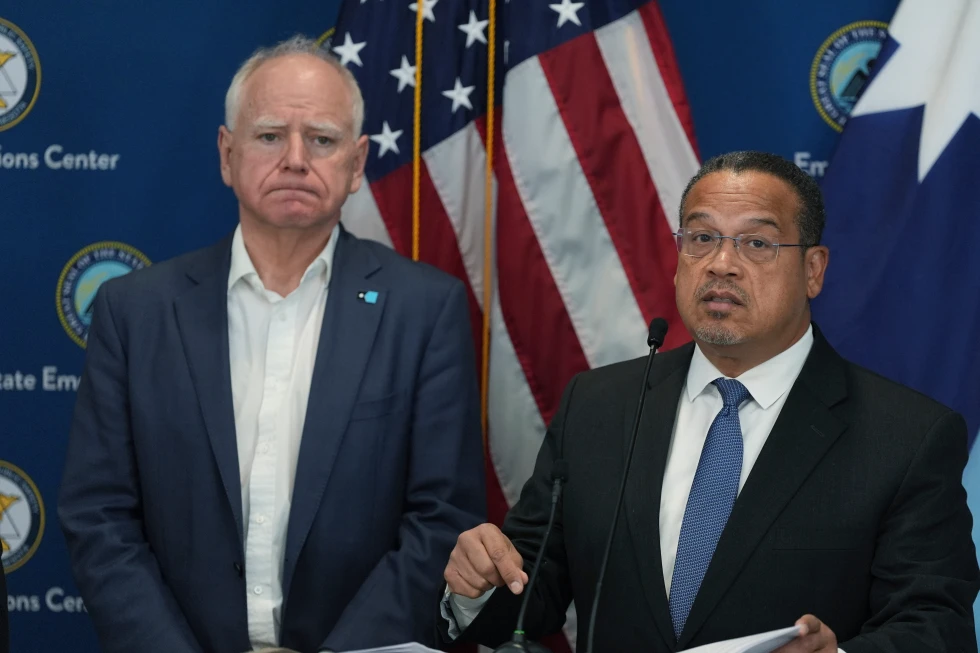
The lawsuit seeks to revert changes made since the Trump administration initiated Operation Metro Surge on December 1, aimed at increasing federal presence and immigration enforcement in Minnesota. Attorney General Keith Ellison will personally attend today’s federal court hearing in Minneapolis.
Ellison and the cities involved are requesting the court mandate a reduction of federal agents to pre-surge levels while still permitting immigration laws to be enforced under various proposed limitations.
Justice Department attorneys have dismissed the lawsuit as legally frivolous and argue it essentially provides a veto power over federal law enforcement. They request that the judge dismiss the case or delay any ruling pending an expected appeal.
Ellison emphasized the lawsuit’s unique implications, stating, The unprecedented nature of this surge constitutes a novel abuse of the Constitution. No one can recall a time this extreme in federal immigration enforcement.\
Pending any ruling, the outcome of this case could set a significant precedent affecting not only Minnesota but also other states facing similar federal enforcement actions. A broad coalition of 19 states plus the District of Columbia has filed a friend-of-the-court brief in support of Minnesota's position, arguing against unchecked federal aggression in immigration policy.
If the judge rules in favor of Minnesota, it could significantly alter the dynamics of current and future federal operations, signaling a substantial pushback against historical practices in immigration enforcement.
The hearing today is only the beginning of what could be a pivotal moment for immigration policy and community relations with law enforcement.