In brief
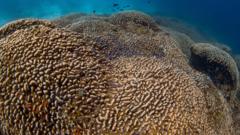
In an exciting development, the largest coral ever documented has been discovered by scientists in the southwest Pacific Ocean. This colossal coral, a single organism made up of numerous connected polyps, is estimated to be over 300 years old and spans an impressive 34 meters in width, 32 meters in length, and 5.5 meters in height. The discovery was made by videographer Manu San Felix during a National Geographic expedition aimed at studying the impacts of climate change on remote Pacific areas.
San Felix recounted the emotional experience of uncovering the coral, likening its beauty to an "underwater cathedral." This remarkable organism, located in the Solomon Islands, has persisted in its environment for centuries, surviving events that spanned over 200 years. Scientists measured the colossal coral using specialized underwater tools and noted its exceptional health, especially compared to nearby coral reefs that have suffered degradation due to rising sea temperatures.The timing of this announcement coincides with the UN climate talks COP29 in Baku, Azerbaijan. Solomon Islands' climate minister Trevor Manemahaga expressed pride in the discovery, highlighting the coral's importance for the nation’s economy and biodiversity. The health of the coral provides a glimmer of hope amid alarming global trends, as recent reports indicate that nearly half of warm-water corals are threatened with extinction, largely due to escalating climate pressures.The newly discovered coral, classified as Pavona clavus, not only offers a habitat for various marine life but also serves as a crucial indicator of historical oceanic conditions. As research continues, scientists are hopeful that this finding can aid in understanding coral resilience and protecting marine ecosystems, especially for vulnerable nations like the Solomon Islands facing the brunt of climate change impacts.