In brief
When David Hockney, the celebrated British painter, died at 88, King Charles joined a chorus of tributes from artists, politicians and cultural leaders. The king’s personal message described Hockney as a “giant of the world of art” and a dear friend of the royal family. The late artist’s work ranged from Yorkshire landscapes to Californian swimming‑pool scenes, and his adventurous use of technology—most famously his iPad paintings—redefined contemporary art. Global institutions, including the Tate and the Pompidou Centre, and the artist’s own supporters confirmed that Hockney’s work will endure in galleries and in the imagination of future generations. The king’s words, echoed by a host of other dignitaries, underline how Hockney’s life and art reshaped cultural attitudes and broadened the scope of British painting.
When David Hockney, the famed British painter whose canvases light up museums worldwide, died on 11 June 2026, King Charles and a wide array of cultural figures sent heartfelt messages of sorrow and celebration.
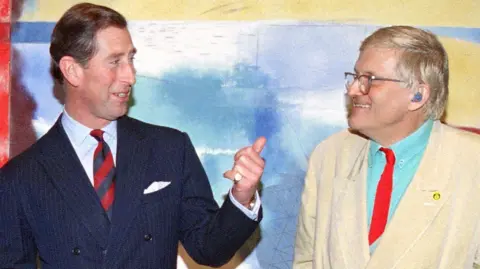
In a personal note, the king called Hockney a “giant of the world of art” and a “dear friend”, expressing how their meeting in 1994 had left an indelible impression. The message also referenced the artist’s Yorkshire roots, his luminous landscapes of the North and his coloured California pool series, noting how their work painted a “modern, joyous reality” of both places.
The legacy of Hockney was reinforced by remarks from artists such as Tracey Emin, who praised his role as a not‑only‑fine‑artist but also a “statement‑making” figure. Grayson Perry described him as a “poet of the spring” and Tim Cook, former Apple CEO, lauded the artist for showing how “creativity has no limits” and converting an iPad into a canvas.
Political leaders joined the tributes. Prime Minister Sir Keir Starmer described Hockney as “one of Britain’s most celebrated artists” and Downing Street noted his “vivid, instantly recognisable work” that “influenced generations of artists.” Lord Cashman highlighted the artist’s early donations to Stonewall, showing how Hockney used his talent to support gay rights when it was far from mainstream.
Major art institutions confirmed the significance of Hockney’s contribution. The Tate said the artist’s 2017 exhibition at Tate Britain remains the museum’s most visited show, and they announced two new projects for 2027: a retrospective of seven decades and a multimedia installation of his opera set designs.
Several cultural leaders, from West Yorkshire mayor Tracy Brabin to London Mayor Sadiq Khan, shared memories of Hockney’s vibrant palettes and his commitment to joy and truth in art, emphasizing how his work highlighted beauty in ordinary subjects and pushed for environmental awareness.
Hockney’s journey began as a boy with a pram full of art supplies in Bradford, went through training at the Royal College of Art—where he earned a gold‑medal distinction—and culminated in a lifelong exploration of colour, light, and technology. His love for everyday scenes—from the Grand Canyon to Normandy—was underscored by his later work with iPads during pandemic lockdowns.
The artist’s passing also prompted personal anecdotes about his life. For instance, punctual anecdotes reveal Hockney’s choice of bright yellow Crocs at the Order of Merit lunch in 2022, echoing his ever‑present sense of humour and optimism in his statement, “A giant of the world of art, a Yorkshireman through and through.”
Family members confirmed that Hockney left his partner, Jean‑Pierre Gonçalves de Lima, his great‑nephew Richard, and various relatives to carry his memory forward. Their survival further illuminates the personal side of his public legacy.
In sum, David Hockney’s death marks the end of an era of artistic daring. Yet, as the king and others reminded us, his creative spirit, bold colours, and joyous vision continue to inspire future artists and will remain alive in galleries, museums, and the hearts of those he touched.