Japan heads to the polls again on Sunday for its second general election in as many years. The snap vote has caught the ruling party, the opposition, and much of the electorate off guard.
Sanae Takaichi, Japan's first female prime minister, is betting on her personal popularity, hoping to succeed where her party failed just last year: delivering a clear public mandate for the long-ruling but deeply unpopular Liberal Democratic Party (LDP).
It is a political gamble - one her predecessor, Shigeru Ishiba, made and lost badly. Voters will now decide whether it will pay off.
The difference this time is that her approval across most media polls has been much, much higher than her predecessors, says Rintaro Nishimura, an analyst and senior associate at The Asia Group's Japan Practice.
Conventional wisdom says: when approval is high, you call an election.
Since taking office last October, Sanae Takaichi has dominated headlines, not through policy or legislation, but through political performance.
The work, work, work mantra in her acceptance speech reinforced the image of an energized, relentless leader.
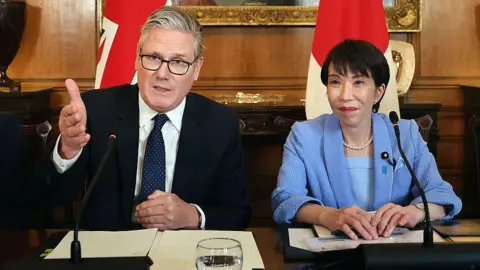
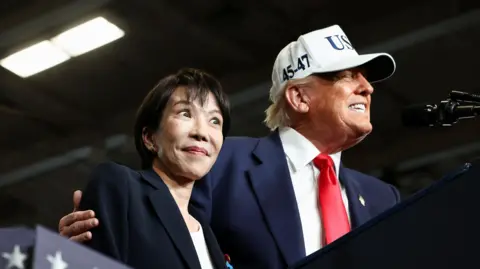
In just over three months, she has cultivated a highly visible public profile. She's taken high-profile visits from world leaders, including receiving Donald Trump only a week into her premiership.
When they appeared aboard the USS George Washington in Yokosuka, the prime minister raised her fists in the air as President Trump lavished her with praise.
And just two days before February's vote, President Trump endorsed Takaichi, saying she has already proven to be a strong, powerful, and wise leader... one that truly loves her country.
There was also her surprise appearance playing the song Golden from the film K-Pop Demon Hunters on the drums alongside South Korea's president, and the selfie with Italy's prime minister.
These were all viral moments projecting confidence and momentum, distancing her from the traditionally stagnant and sometimes boring image of her predecessors.
There is an atmosphere of positivity about her being the first female prime minister in Japanese history, about her being successful at diplomacy… with her having approval ratings in the 60s or sometimes as high as 70%, says Jeffrey Hall, lecturer at Kanda University of International Studies.
Professor Hall added that this image has been propped up by a large conservative group on the internet of users and social media influencers who provide a strong base for Takaichi, with posts showing her in a positive way going viral almost every day during the election.
Takaichi has consolidated support among the LDP's conservative base, reviving long-dormant goals such as constitutional revision and emphasizing traditional values.
She's positioned herself as the leader who brings the LDP back to its [conservative] origins, Nishimura says. That has resonated internally among party elders as well as with the LDP base.
Beyond the conservative base, Takaichi has connected with younger voters in a way not seen by a Japanese leader before. Her handbags and pink pens have become unlikely zeitgeist items.
That personal appeal has translated into strong approval ratings hovering between mid-fifties and high sixties, according to NHK and other major media polls.
With a recent Asahi Shimbun survey suggesting the party is on track to gain significantly more than the 233 seats needed for a majority, the election risk appears high yet promising for Takaichi and the LDP.
The timing of the election has drawn criticism from opposition parties who argue that it has delayed anti-inflation measures and postponed debate over the fiscal 2026 budget. The primary motivation behind the snap election is thought to be parliamentary arithmetic, with Takaichi aiming to regain a majority to push through her policies unchallenged.
However, challenges remain as voter concerns over the economy and cost-of-living strains could influence the election's outcome. Rising prices and stagnant wages loom large, shaping public perception of the ruling party as they cast their ballots. Nonetheless, Takaichi's gamble to call an early election could ultimately turn the tides for her leadership and Japan's political future.