In brief
Médecins Sans Frontières (MSF) has released a harrowing report documenting widespread sexual violence in Sudan, stating it is now an everyday occurrence in regions affected by the civil war. Based on testimonies from over 3,000 survivors, the report calls for immediate humanitarian action and accountability, emphasizing the severe ethnic targeting of non-Arab communities.
Rape and sexual violence remain part of everyday life in areas of Sudan even when fighting in the country's civil war has moved elsewhere, according to a new report by medical charity Médecins Sans Frontières (MSF).
Calling rape a defining feature of the conflict, it says sexual assault is overwhelmingly carried out by armed men and is often accompanied by acts of brutality and humiliation.
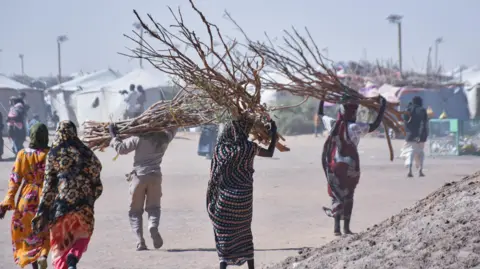
But MSF says rape persists as an insidious part of life for communities in the western region of Darfur that are no longer on the front line.
The report is the most comprehensive account yet on sexual violence in Sudan's nearly three-year war.
Warning: This article contains details of sexual violence that some people may find distressing
It is based on testimonies from 3,396 victims who sought treatment in MSF-supported facilities across North and South Darfur between January 2024 and November 2025.
The warring parties - Sudan's army and the paramilitary Rapid Support Forces (RSF) - are both accused of sexual violence. But Darfur is the stronghold of the RSF and the vast majority of perpetrators identified by survivors were their fighters.
Many of the cases in the report took place in the conflict hotspot of North Darfur last year, following the RSF takeovers of the displaced persons camps of Zamzam and Abu Shouk, and of the city of el-Fasher in October, which MSF calls one of the most shocking iterations, unfolding the most unimaginable brutality.
The charity says more than 90% of victims it treated were assaulted while travelling from these areas to safety in the town of Tawila.
The attacks often involved multiple rapists and included other forms of extreme violence and intimidation such as beatings or the murder of relatives.
They took us to an open area, said one woman quoted in the report. The first man raped me twice, the second once, the third four times and the fourth once, she said.
Another survivor recounted, Two of the women in our group were raped by RSF militia in front of us. It was four to five men doing it together. One girl was 22 years old and she died there.
The report reinforces numerous accounts of an ethnic dimension to the attacks, saying non-Arab communities such as the Zaghawa, Massalit, and Fur were systematically targeted in these atrocities.
In South Darfur, 68% of victims said they were assaulted by armed men, although they also identified other perpetrators including civilians, criminal groups, and intimate partners.
MSF says its data represents only a fraction of the true scale of the abuse, given significant barriers to care such as ongoing insecurity and displacement, intense stigma, and the absence of functioning protection services. The charity calls for accountability and action to address these issues.