In brief
Kentucky farmer Daniel Bell's plans to install solar panels on his farm faced obstacles after the Trump administration suspended government grants essential for such projects. As the agricultural sector turns to renewable energy to cut costs, the future of solar development is uncertain due to recent regulatory changes affecting programs like the USDA's Rural Energy for America Program (REAP). Farmers are left to adapt quickly or risk losing out on potential savings and renewable energy benefits.
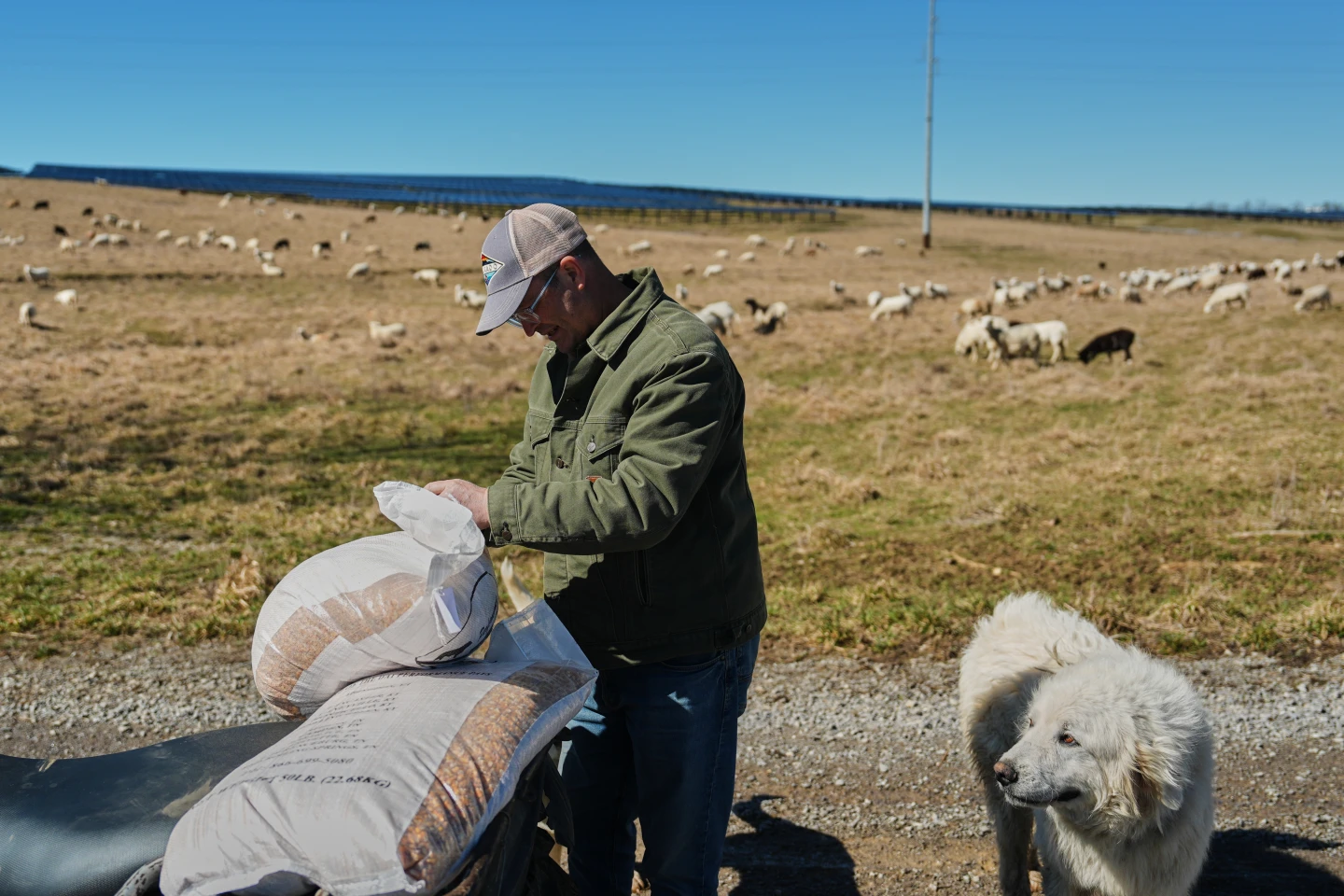
Over the past few years, Kentucky sheep farmer Daniel Bell has expanded his flock, prompting the need for a new barn. Far from power lines, he saw rooftop solar as a solution. However, applying for a renewable-energy grant under the Department of Agriculture's Rural Energy for America Program (REAP) was complicated by a suspension of grants by the Trump administration.
“For me, it’s just been about freedom. Freedom to lower bills, freedom to control my own assets,” says Bell.
Farmers like Bell, operating on narrow margins, are turning to federal support as a lifeline for renewable energy investments. However, this funding has dried up under new policies, which have already delayed many projects and investments.
The USDA has not awarded a single dollar through REAP this fiscal year, stirring anxiety among farmers who depend on these grants for solar installations. Some are now pursuing arrangements with commercial solar operations instead of building on their own properties.
Elisa Lane, a fruit farmer in Maryland, faced the stress of having her $30,576 REAP grant frozen, forcing her to contract solar installation costs without assurance of funding. While she eventually received reimbursement, the delays exemplify the uncertain landscape.
Daniel Bell attempted to adapt by proposing temporary barns on land leased for solar grazing, drawing cheaper energy from that operation, but not every farmer has such alternatives.
New restrictions and the daunting timeline to access tax credits only add pressure, with many projects now abandoned as companies scramble to meet deadlines. As developers revise plans in light of the administration's shifting priorities, the implications on small-scale farms remain significant.
“In places like Iowa and Texas, renewables matter for farmers’ pocketbooks,” said former USDA official Robert Bonnie. The loss of federal support has left many farmers at risk, navigating a changing environment with fewer resources. The impact of current policies will be felt for years to come, challenging the sustainability of renewable energy initiatives.
Despite these obstacles, some developers see opportunity. Solar energy remains one of the cheapest forms of power, presenting potential for investment and growth if they can adapt to the new landscape.