Europe Takes a Hard Stance Against Trump's Greenland Claims
Something in Europe has snapped.
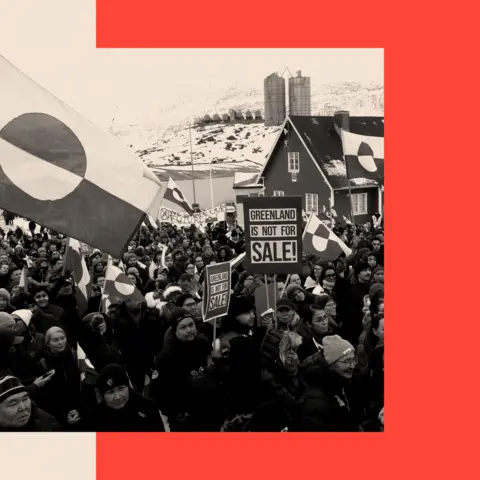
Donald Trump doubled down again on Monday night in his insistence that the US has to have Greenland for national security reasons. He predicted that Europe’s leaders aren’t gonna push back too much. However, that’s not the strategy they plan to employ when they meet the US President at the World Economic Forum (WEF) on Wednesday.
Greenland is a semi-autonomous territory of Denmark - an EU and NATO member. President Trump is now pushing Denmark’s allies in these organizations to abandon Copenhagen in favor of US control over Greenland or face significant taxes on exports to the US.
This scenario poses a dire threat to European economies, which are grappling with stagnation, particularly those reliant on exports to the US, such as Germany’s automotive sector and Italy’s luxury markets.
In response, Germany's finance minister asserted, “we will not allow ourselves to be blackmailed,” following an emergency meeting with his French counterpart. Trump's threats struck like a slap in the face to European governments, which had only recently negotiated tariff deals with the US president.
French Finance Minister Roland Lescure lamented, We're living through uncharted territories. An ally, a friend of 250 years, is considering using tariffs as a geopolitical weapon. His German counterpart Lars Klingbeil remarked, A line has been crossed... Europe must be prepared. The formerly cordial approach to Trump favored by European leaders since his second term began appears as outdated as ever.
Europe's Good Cop, Bad Cop Approach
It is premature to declare the transatlantic relationship entirely broken; the EU anticipates approaching Trump in Switzerland at WEF with a strategy of speaking softly, while carrying a big stick. European leaders are discussing Arctic security solidarity, aiming to discourage unilateral US actions regarding Greenland.
In contrast, EU diplomats are apparently contemplating imposing €93 billion (£80 billion) in tariffs on American goods or limiting access for certain US businesses if Trump enforces the tariffs related to Greenland.
These retaliatory measures could adversely affect US consumers as well. European investments throughout nearly all US states contribute significantly to American job markets, employing about 3.4 million individuals.
The EU, often unable to project a unified international voice, stands as the world’s largest goods and services trader, accounting for nearly 16% of global trade in 2024. Brussels hopes Trump will reconsider his hardline stance on Greenland, recognizing that acquiescing could result in losing essential allies while simultaneously precipitating increased US consumer costs due to retaliatory tariffs.
Trust in US Security Guarantees
However, US Treasury Secretary Scott Bessent seemed unimpressed, emphasizing, The president is looking at Greenland as a strategic asset for the United States. We are not going to outsource our hemispheric security to anyone else.
European leaders are now caught in a dilemma; being confrontational with Trump risks alienating the US, which is crucial for establishing peace in Ukraine and maintaining continental security. Despite increased defense expenditure, Europe is still heavily reliant on the US.
Relations are Strained but Not Broken
As the dynamics shift, calls are being made for unity within Europe to tackle Trump collectively, despite disparities among EU member states. They find themselves torn between international obligations and domestic concerns, with fears that escalating conflicts could harm their economies. While lines of communication between European leaders and Trump remain open, overcoming this significant challenge will require solidarity and effective negotiation.