In brief
Fishermen on Sierra Leone’s Sherbo Island say their catches have plummeted as large foreign trawlers enter coastal waters. Their nets are routinely cut or damaged by these vessels, costing local fishers up to £189 to replace gear each time. The industry is part of a global problem, with the seven‑mile exclusion zone often violated by Chinese boats. Calls for tighter regulation and enforcement echo across the region.
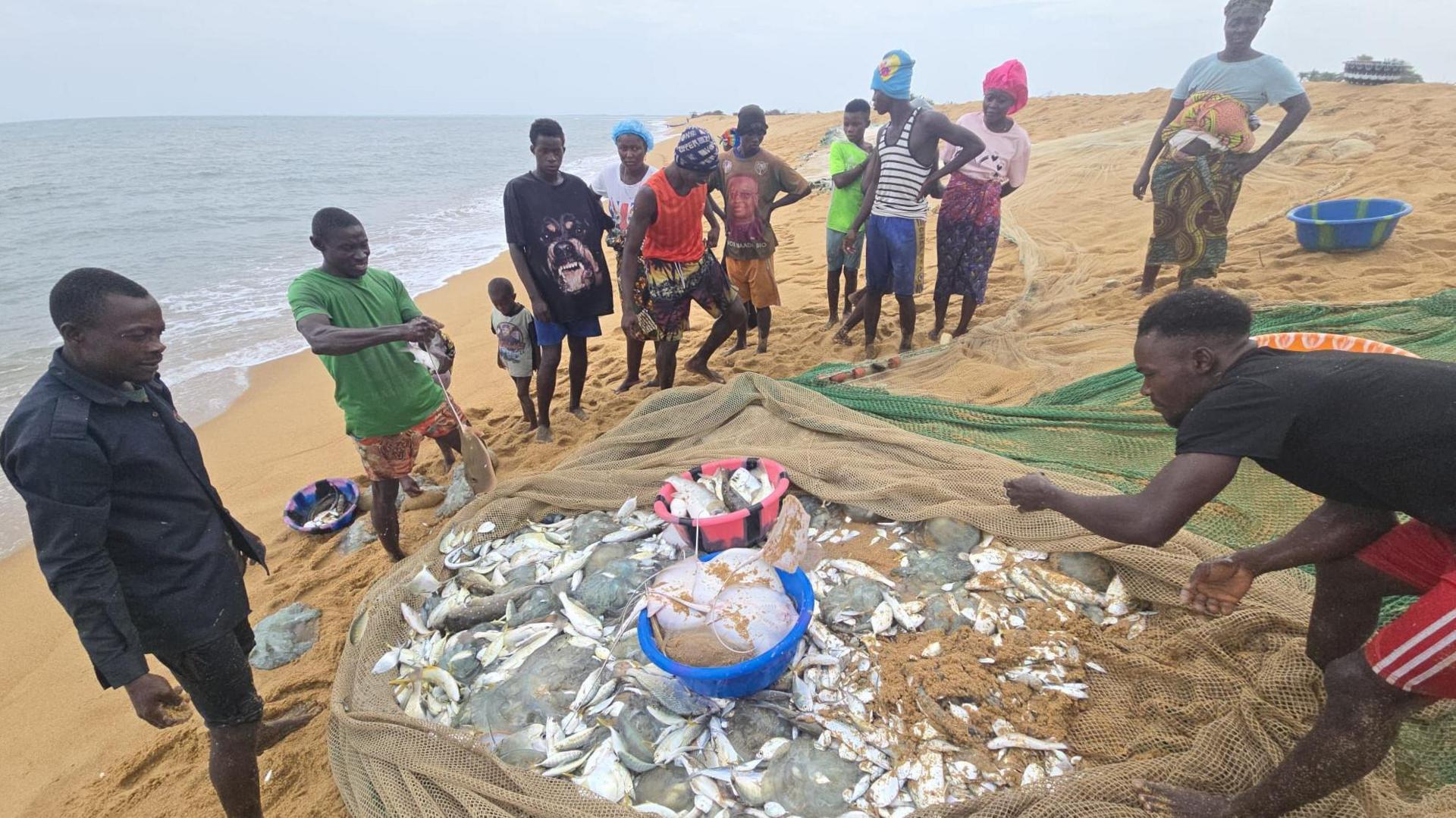
In the fishing community on Sierra Leone’s Sherbo Island, villagers are rallying after a dramatic drop in their catches. “We cast our nets in the evening and return to shore,” says fisherman Musa Gassimo, who accuses international trawlers of cutting the lines deliberately, costing the locals up to £189 per net replacement.
Local fishermen also report that the large foreign vessels operate outside the seven‑mile exclusion zone, illegally fishing and severely depleting marine resources. The loss, estimated at 40% for many, threatens not only income but also food security for millions.
Thomas Turay, president of the Sierra Leone Fishermen’s Union, points to alleged corruption within the ministry, saying that authorities fail to enforce penalties against intruding fleets. He stresses that while transponders and inspectors exist, they are reportedly ineffective in practice.
Meanwhile, the Environmental Justice Foundation’s Steve Trent argues that the Chinese government’s approach is “head‑in‑the‑sand,” enabling unregulated fishing through subsidies and poor oversight. He calls for better vessel tracking and global consumer pressure to curb illegal catches.
The Chinese Chamber of Commerce in Sierra Leone has yet to respond, while China’s Foreign Ministry has publicly denied involvement in over‑fishing elsewhere. The growing conflict highlights the urgent need for transparent regulation of distant‑water fishing fleets to protect local communities and preserve regional marine ecosystems.