In brief
A recent trade agreement between Australia and the European Union promises to increase Australian beef exports and reduce tariffs on numerous agricultural goods. The deal, described as a 'win-win', will not only benefit producers but also provide Australian consumers with cheaper European products. However, concerns remain about the quotas set for meat exports, which some Australian farmers deem inadequate.
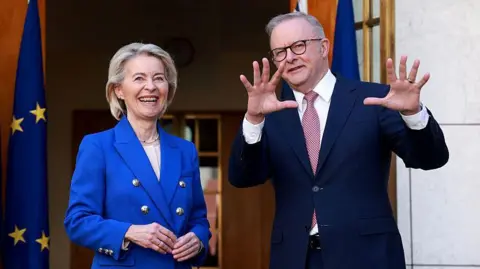
More Australian beef will be served on the dining tables of Europe under a new free trade deal with the European Union that cuts most export tariffs on Australian products. The deal, worth about A$10bn ($7bn; £5.2bn), was inked on Tuesday with Australia's prime minister and the head of the European Commission describing it as a mutual 'win-win'.Under the agreement, eight years in the making, almost all EU tariffs will be lifted on Australian agricultural products such as wine, fruit and vegetables, olive oil, seafood, most dairy products, and wheat and barley. This will mean a saving of about A$37m for local wine producers and exporters, making European wine, spirits, biscuits, chocolates, and pasta cheaper for Australian consumers.The deal allows Australian producers to continue using names such as parmesan, although feta will be subject to 'grandfathering and lengthy phase-out periods' due to strict EU naming rights. Australian Prime Minister Anthony Albanese acknowledged the historical significance of food naming rights and the connection with European migrants who have influenced local cuisine.European Commission President Ursula von der Leyen hailed the deal as a 'perfect balance,' stating that it facilitates easier export for Australians while increasing the availability of EU goods in Australia. Despite the optimism, Andrew McDonald from Meat and Livestock Australia expressed disappointment over the meat export quotas, which fell short of what Australian farmers had sought.The agreement also establishes a new security and defence partnership, increasing cooperation between Australia and the EU in various sectors.Von der Leyen emphasized the importance of this relationship amidst a rapidly changing world, stating, 'In a world where great powers are using tariffs as leverage and supply chains as vulnerabilities to be exploited, trust matters more than transactions.' The trade agreement signifies a pivotal moment in international relations for both Australia and the European Union.