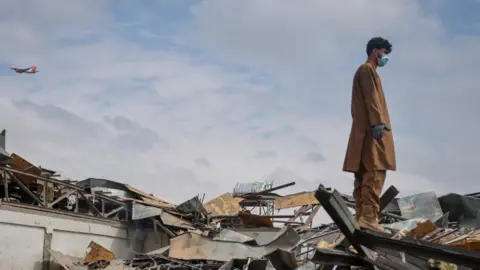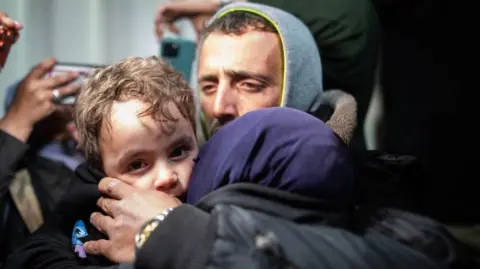
As Gazans start to return home after prolonged displacement, the scale of destruction poses significant humanitarian challenges. Journalist Ghada el-Kurd describes the struggle ahead: “We have to re-establish again from the beginning, from zero.” The United Nations reports that the humanitarian needs are escalating as around 70% of the Gaza Strip's buildings have been damaged or destroyed since the outbreak of hostilities in October 2023.
Many displaced families are wrestling with the reality of their new homes. They seek immediate necessities such as food, shelter, and basic services—needs that are partially being met through aid efforts. However, the UN warns that the demand for shelter exceeds supply: “There simply aren't that many manufactured tents for aid operations anywhere in the world,” says Sam Rose from UNRWA.
As families begin to occupy homes abandoned over a year ago, tensions mount. Asmaa Tayeh, who has remained in the north while others fled, reports overcrowding and strained conditions. “There's a huge problem because people used to stay in houses of relatives or friends who are in the south,” she explains.
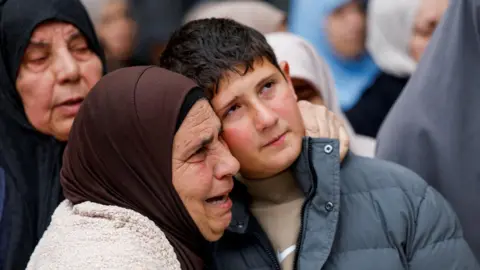
Prices are soaring as scarcity bites; returning residents are witnessing rising costs of goods, such as fish, signaling a return to economic difficulties. Yet, emotions run high among those returning, with some expressing joy at returning to their northern roots, as one woman noted, “We are overjoyed to return to the north, where we can finally find comfort.”
The future remains uncertain, with suggestions from global figures like Donald Trump sparking controversy over potential re-settlement of refugees in neighboring countries. Officials in Egypt and Jordan swiftly dismissed such notions, stating fundamental concerns about their national integrity and societal welfare.
Jordanian Foreign Minister Ayman Safadi encapsulates the sentiment: “Jordan is for Jordanians and Palestine is for Palestinians.” However, if the reconstruction efforts lag, many fear these sentiments may prompt more people to leave Gaza in search of better opportunities abroad.
Ghada el-Kurd articulates the urgency: “If they lost everything and the reconstruction process is delayed, I think people will not stay in Gaza.” As the humanitarian crisis deepens, the fate of the returning Gazans hangs delicately in the balance, tied to the prospects of reconstruction and their aspirations for a renewed life in stability.
Many displaced families are wrestling with the reality of their new homes. They seek immediate necessities such as food, shelter, and basic services—needs that are partially being met through aid efforts. However, the UN warns that the demand for shelter exceeds supply: “There simply aren't that many manufactured tents for aid operations anywhere in the world,” says Sam Rose from UNRWA.
As families begin to occupy homes abandoned over a year ago, tensions mount. Asmaa Tayeh, who has remained in the north while others fled, reports overcrowding and strained conditions. “There's a huge problem because people used to stay in houses of relatives or friends who are in the south,” she explains.
Prices are soaring as scarcity bites; returning residents are witnessing rising costs of goods, such as fish, signaling a return to economic difficulties. Yet, emotions run high among those returning, with some expressing joy at returning to their northern roots, as one woman noted, “We are overjoyed to return to the north, where we can finally find comfort.”
The future remains uncertain, with suggestions from global figures like Donald Trump sparking controversy over potential re-settlement of refugees in neighboring countries. Officials in Egypt and Jordan swiftly dismissed such notions, stating fundamental concerns about their national integrity and societal welfare.
Jordanian Foreign Minister Ayman Safadi encapsulates the sentiment: “Jordan is for Jordanians and Palestine is for Palestinians.” However, if the reconstruction efforts lag, many fear these sentiments may prompt more people to leave Gaza in search of better opportunities abroad.
Ghada el-Kurd articulates the urgency: “If they lost everything and the reconstruction process is delayed, I think people will not stay in Gaza.” As the humanitarian crisis deepens, the fate of the returning Gazans hangs delicately in the balance, tied to the prospects of reconstruction and their aspirations for a renewed life in stability.