Gaza's Children Find Hope in Makeshift Classrooms
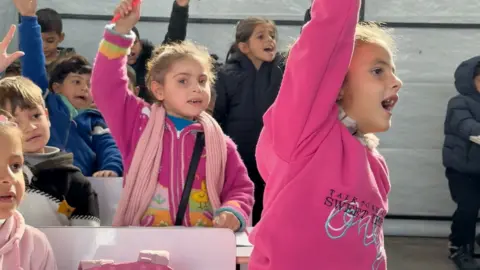
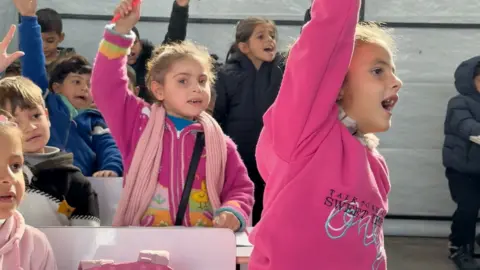
In Gaza City, the sound of children learning can be heard once again. Tents now serve as classrooms that are lively with the chatter of eager students. Following the Israel-Hamas ceasefire, education has resumed in a region where many schools have been lost to conflict.
The Lulwa Abdel Wahab al-Qatami School, previously a refuge for displaced families, is one such establishment now filled with the hopeful laughter of children. With more than 658,000 school-aged children in Gaza, a significant portion have missed out on education for nearly two years.
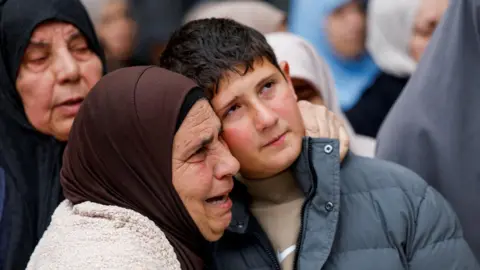
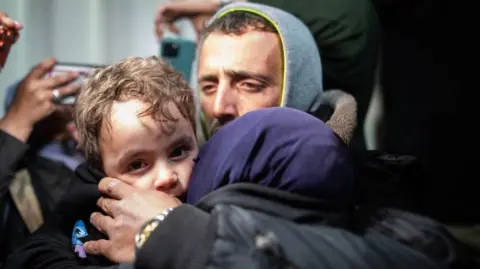
The return to routine marks a critical moment as children, some of whom have lost family members, attempt to reclaim aspects of their childhood. Naeem al-Asmaar, a fourteen-year-old whose mother died in an airstrike, reflects on his longing for school, despite the stark differences between pre-war education and the current makeshift setup.
The school, supported by UNICEF, teaches only the basics — Arabic, English, mathematics, and science — due to a lack of resources. Principal Dr Mohammed Saeed Schheiber acknowledges the emotional strain on students, with many suffering from trauma.
Despite challenges, including shortages of educational materials and basic supplies, the desire for knowledge remains strong among both children and educators. Teachers emphasize that education is essential for rebuilding lives and futures.
As the situation evolves, many parents express anxiety over their children's disrupted education, hoping for a return to normalcy amid ongoing turmoil and uncertainty.