In brief
Blue Ghost's successful touchdown highlights the evolving role of private companies in lunar exploration and the potential for new advancements in space travel.
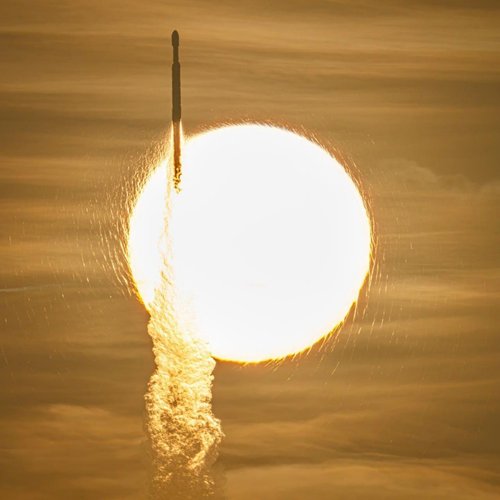
In a landmark achievement, the private spacecraft Blue Ghost has successfully landed on the Moon, making it the second commercial vehicle in history to reach the lunar surface. Launched on January 15 by Firefly Aerospace, Blue Ghost aimed to conduct exploration tasks in the Sea of Crises, a significant crater that is prominently visible from Earth.This mission is part of an escalating collaboration between NASA and private firms focused on deep-space exploration. Intuitive Machines, another private company, plans to deploy its Athena spacecraft near the Moon's south pole within the upcoming days, following its predecessor, Odysseus, which landed on February 22 last year but faced complications, ultimately tipping over upon landing.Celebrations erupted at Firefly's headquarters in Texas after the successful landing. According to Dr. Simeon Barber, a planetary science researcher at the Open University, Blue Ghost represents a pivotal moment as it is the first successful private venture that remained intact and operational post-landing. “They've demonstrated a technology for landing on the Moon, something that had been overlooked since the Apollo missions,” said Dr. Barber.He underscored the significance of lunar exploration for private enterprises as it could serve as a launchpad for broader explorations of space. The Moon presents challenges such as extreme temperatures, dust, and radiation, making it an ideal testing ground for robotics.The discussions surrounding lunar exploration also noted that human presence on the Moon has been absent since the Apollo 17 mission on December 19, 1972, primarily due to funding constraints. Dr. Barber emphasized that previous Apollo missions were costly and unsustainable, lasting only a few days.He further argued that the involvement of private companies might lead to novel innovations and reduced costs associated with lunar landers, potentially even enabling resource extraction such as water on the Moon for future missions. In contrast, the first private entity to attempt a Moon landing, Astrobotic Technology, faced failure in January 2024 due to a suspected fuel leak, resulting in its lander crashing back to Earth in a fiery descent.As interest in lunar missions grows, Blue Ghost’s landing shines a hopeful light on the future of space travel and the potential for increased commercial participation in exploring the Moon and beyond.