In brief
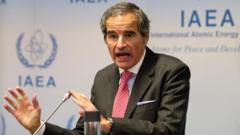
The head of the International Atomic Energy Agency, Rafael Grossi, expressed serious concerns regarding Iran's decision to significantly boost its stockpile of highly enriched uranium, indicating that this move could provoke regional tensions and normalize conversations around nuclear arms among other nations.
Rafael Grossi, the director general of the International Atomic Energy Agency (IAEA), shared his apprehensions during a recent BBC interview, highlighting Iran's alarming choice to ramp up its production of uranium enriched to 60%. This level of enrichment is merely short of what is required for nuclear weaponry. Grossi characterized this development as "very worrisome," particularly in light of Iran's geopolitical challenges in regions such as Syria, Lebanon, and Gaza.Grossi noted that while some Iranian politicians are openly advocating for the pursuit of a nuclear arsenal, conversations he had with the current Iranian leadership suggest they are not committing to this potentially perilous trajectory at the moment. His remarks came during the Manama Dialogue in Bahrain, a prominent conference focused on strategic issues.The IAEA chief voiced particular concern for the region, advising Israel against any military action targeting Iranian nuclear sites, which could trigger severe retaliatory measures from Tehran—including possible radiation risks. His insights reflect a larger unease about the proliferation of nuclear capabilities as more nations contemplate the acquisition of such weapons.The IAEA recently confirmed an increase in the rate of uranium production at Iran's Fordow nuclear facility, with estimates suggesting an escalation from 4.7 kg to 34 kg of 60% enriched uranium per month. This significant growth has raised red flags and prompted calls for urgent safeguards to ensure that the facility is not misusing declared nuclear material.Despite Iran's insistence on peaceful nuclear ambitions, Grossi highlighted the rapid evolution of its nuclear program over the past decade, asserting that Iran is now in a position to produce sufficient materials for a nuclear device much more swiftly than before. During a prior visit to Tehran, Grossi received assurances from Iranian authorities that they would limit their 60% uranium output, yet recent developments indicate otherwise.The IAEA leader underscored the need for continued diplomatic efforts, especially in light of stalled negotiations between Iran and European officials. He expressed the hope that Iranian leaders would reject the idea of pursuing nuclear weapons, considering it a misjudgment that could have dire implications.With discussions around the potential for an Israeli attack on Iran’s nuclear facilities still evolving, Grossi warned about the repercussions such actions would entail, including significant military responses and catastrophic environmental consequences—a reality he urged global actors to avoid.He concluded by emphasizing that the global nuclear non-proliferation framework faces increasing pressure, as established nuclear states appear to be investing in their arsenals, prompting other nations to rethink their security strategies and consider nuclear options.