In brief
In 2024, despite major elections in 46 countries, the representation of women in parliament has slowed to its lowest growth rate in two decades, revealing significant setbacks in numerous democracies worldwide.
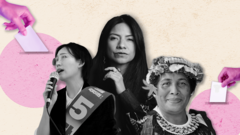
The 2024 elections, which involved nearly 3.6 billion individuals globally, saw a stagnation in the advancement of women's political representation, marking the lowest growth in 20 years. Data from the Inter-Parliamentary Union indicates that 27 newly elected parliaments, including notable countries such as the United States, Pakistan, and South Africa, ended up with fewer women than before the elections. Disturbingly, the European Parliament experienced a historic low with fewer women elected.The findings show that approximately two-thirds of the 46 nations analyzed reported a decrease in female representatives, with an overall growth rate barely registering at 0.03%. Conversely, there were some gains in countries like the UK, Mongolia, and the Dominican Republic, while both Mexico and Namibia celebrated the election of their first female presidents.Mariana Duarte Mutzenberg from the IPU highlights the fragility of progress in specific democracies, citing the Pacific Island nation of Tuvalu, which now has no female lawmakers after losing its only representative. The Pacific Islands currently hold the lowest global percentage of female parliament members at just 8%.Internationally, women now constitute 27% of parliamentarians, with only 13 countries approaching near-equal representation. Latin America and certain African nations are currently leading in female political representation, aided significantly by gender quotas, which have proved effective in elevating women's participation.Research shows that countries with gender quotas have a higher average of elected women (29%) compared to those without (21%). Mexico's progress to gender parity in its parliament was initiated under former president Andrés Manuel López Obrador’s mandate for equal representation.Approval of parental policies in 2010 has barely influenced representation, with many parliaments still lacking such benefits. Further barriers to women's participation include financial hurdles, safety concerns, and societal expectations linked to caregiving roles.Experts like Julie Ballington of UN Women and Dr. Rachel George from Stanford University emphasize the negative impacts of electoral system designs, which often favor male-dominated structures, and an alarming increase in gender-based violence and online harassment that discourages women from entering politics. Achieving balanced representation is crucial not just for fairness but also for enhanced decision-making, as suggested by EIGE's Carlien Scheele, who indicates that gender-diverse legislative bodies lead to better economic and social outcomes. As discourse around women's political representation shifts, advocates continue to stress that it is not merely a matter of addressing the lack of women in power but rather confronting the overwhelming male representation in contemporary politics.