In brief
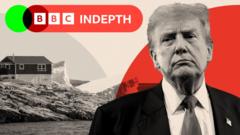
As Greenland grapples with its colonial past and burgeoning desire for independence, the implications of Donald Trump's remarks about the territory evoke questions about national identity and future governance.
On a prominent hill overlooking Nuuk, the capital of Greenland, stands a towering statue of Hans Egede, a protestant missionary credited with renewing Greenland's connections with Europe in the early 1700s. This figure symbolizes both Danish colonial pride and the painful history that the Inuit majority have endured since that era. A distant memory of a time when the statue was famously covered in red paint illustrates the deep-seated dissatisfaction among some Greenlanders towards the changes Egede spearheaded.Greenland, home to approximately 57,000 residents, gained a measure of autonomy from Denmark in 1979, transitioning towards self-rule. While modern conveniences such as healthcare and education improved under Danish governance, pervasive issues like alcoholism have plagued communities, raising debates over the benefits of colonialism. Today, the quest for true independence is igniting passions anew.Recently, Donald Trump has directed attention towards Greenland, an interest that has reignited historical wounds and aspirations for sovereignty. While at a press conference, Trump suggested he could not rule out using military or economic pressure to secure control over Greenland, calling it vital for U.S. economic security. Danish Prime Minister Mette Frederiksen, however, firmly asserted that "Greenland belongs to the Greenlanders," emphasizing their right to determine their own destiny.Public opinion on U.S. control of Greenland remains largely unfavorable, with a poll indicating that merely 6% of Greenlanders support such a shift and a clear majority—85%—resisting the idea. This reluctance stems partly from a historical backdrop that teeters on the edge of perceived colonial exploitation, with Greenland’s sovereignty entwined in a complicated legacy of Danish rule characterized by oppression and misguided policies.Amidst discussions about independence, allegations of systemic reproductive coercion targeting Greenlandic women in the 1960s and 1970s cast a long shadow over relations with Denmark. Such revelations have been labeled as "genocide" by current Greenlandic leaders, underscoring the urgent need to reconcile with a troubled past while forging a distinct future.In recent years, a significant number of Greenlanders have expressed a yearning for independence, with surveys revealing that around two-thirds of the population support the idea of self-governance. Activists advocate for a restructuring of economic and political ties, emphasizing the desire for equal footing among independent nations while recognizing the interconnectedness of modern global systems.Many Greenlanders perceive independence as a complicated scenario. They seek a balance that preserves essential welfare benefits while redefining their international relationships, particularly with the U.S. and potential partnerships with neighboring Iceland and Canada. The concept of "free association" is emerging as an alternative, allowing for some level of independence while retaining beneficial ties that could aid in critical sectors like health care and education.However, questions persist: how would Greenland sustain its economy without Danish aid, and would external partners take on the responsibility to maintain existing welfare systems? These queries highlight the complexities of a potential shift, revealing that although aspirations for autonomy flourish, the path forward requires careful navigation.In summary, as Greenland contemplates its future amid pressures from external powers and an informed push for independence, the struggle to redefine its identity and governance promises to shape not just the island’s destiny but also its place in the evolving dynamics of international relations. Greenland's relationship with its past, intertwined with Denmark, poses both challenges and opportunities as it steps towards a future of potential self-determination.