In brief
Hab-1 is India's first analog mission designed to prepare astronauts for space conditions, tested in the extreme environment of Ladakh. Built with innovative materials, the mission aims to address challenges of limited space and resources in eventual lunar and Martian habitats.
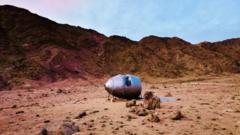
India's first analog space mission, Hab-1, has completed a three-week testing phase in the harsh environment of Ladakh, paving the way for future astronaut habitats on the Moon or Mars. Designed by Aaka Space Studio, this egg-shaped structure simulates space conditions and aims to equip astronauts with essential skills for real missions.According to space architect Aastha Kacha-Jhala, the Hab-1 module is constructed from advanced materials like space-grade Teflon and high-insulation foam, incorporating features such as a bed, workstation, storage, kitchenette, and a dry toilet to manage limited water supplies effectively. “Hab-1 is developed with the understanding that living spaces will be cramped on the Moon or Mars,” Kacha-Jhala emphasized.ISRO's ongoing Gaganyaan mission plans to send three astronauts into low-Earth orbit next year, indicating gradual strides towards human space exploration. Meanwhile, two Indian astronauts are currently receiving training at NASA. "Creating our own simulation missions will reduce reliance on foreign agencies," noted Prof. Subrat Sharma from Ladakh University, which collaborated on the project.Ladakh's unique geographical features—rocky terrain and sparse vegetation—resemble aspects of Mars and the Moon, making it an ideal testing ground. The region also provides isolation, allowing scientists to examine how astronauts cope with psychological and physical stresses over prolonged periods.During the simulation, the participating astronaut faced the reality of isolation, strict schedules, and constant monitoring of health metrics. "The initial excitement faded, and routines began to feel repetitive," the astronaut shared anonymously, revealing the challenges of mental endurance in simulated space conditions.In an era where various nations prepare for interplanetary missions, the experience gained from Hab-1 is crucial. Prof. Sharma noted that the insights will inform future medical technologies and operational strategies designed for extended missions where conditions differ substantially from Earth.As India sets its sights on sending astronauts to the Moon by 2040 and establishing a space station by 2035, the successful operation of Hab-1 signifies an important step in preparation for human life beyond our planet, echoing a global race in space exploration.